Last updated October 30, 2026
 Sweep & inspection
 Caps & crowns
 Flue relining
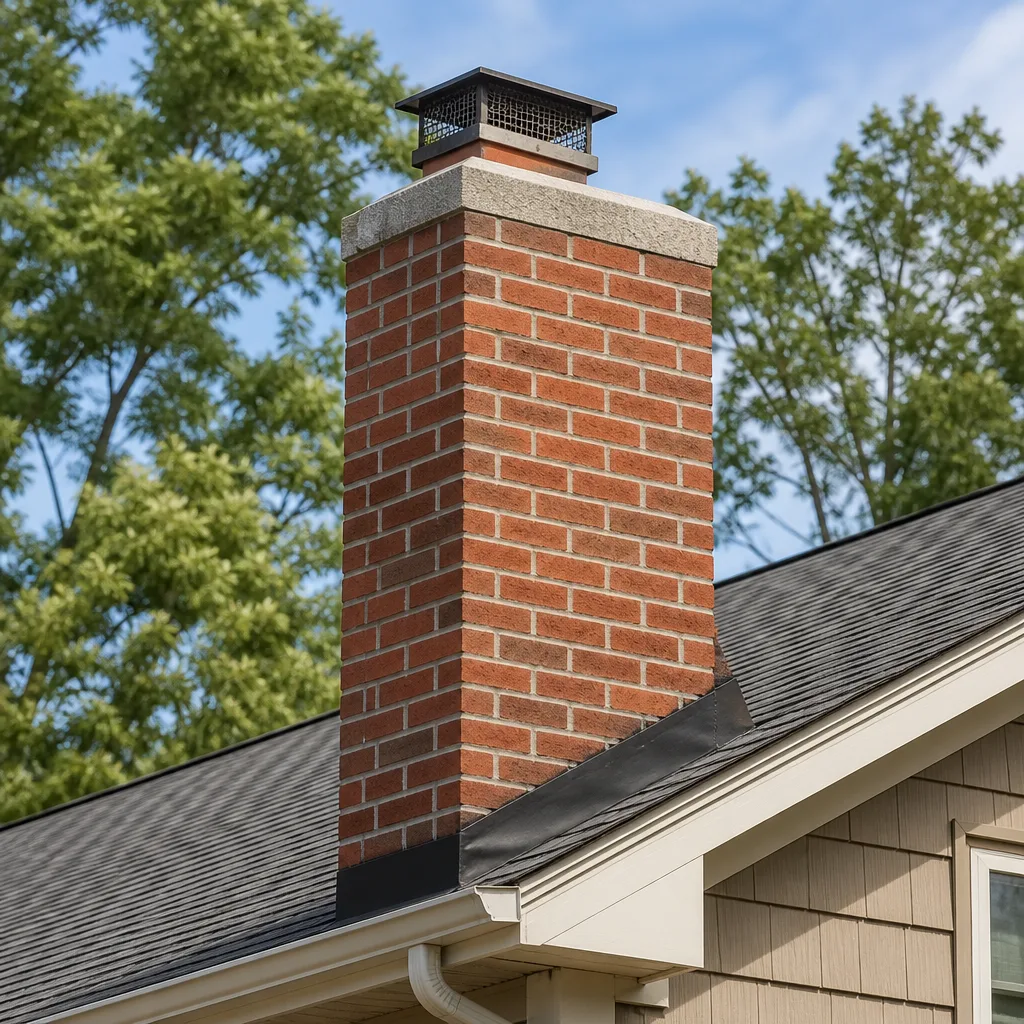 Masonry repair
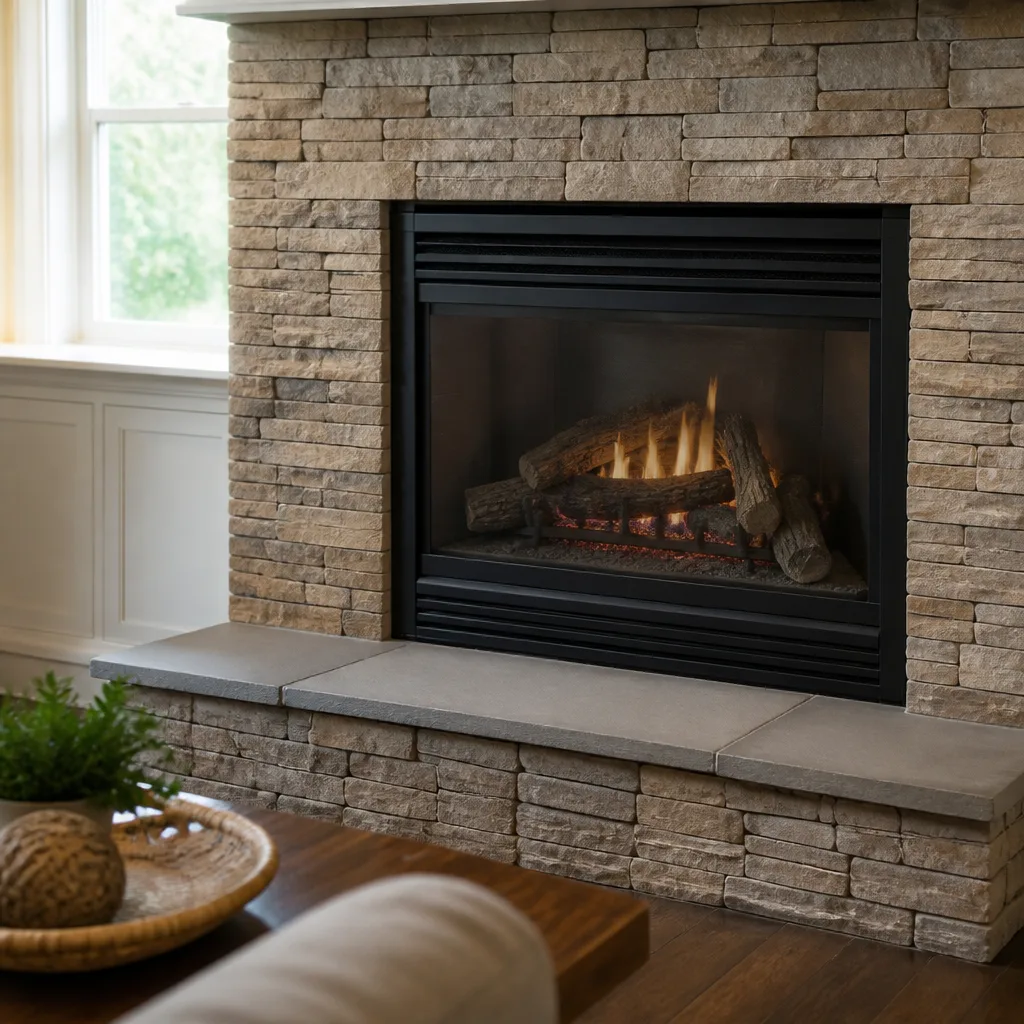 Gas fireplace service
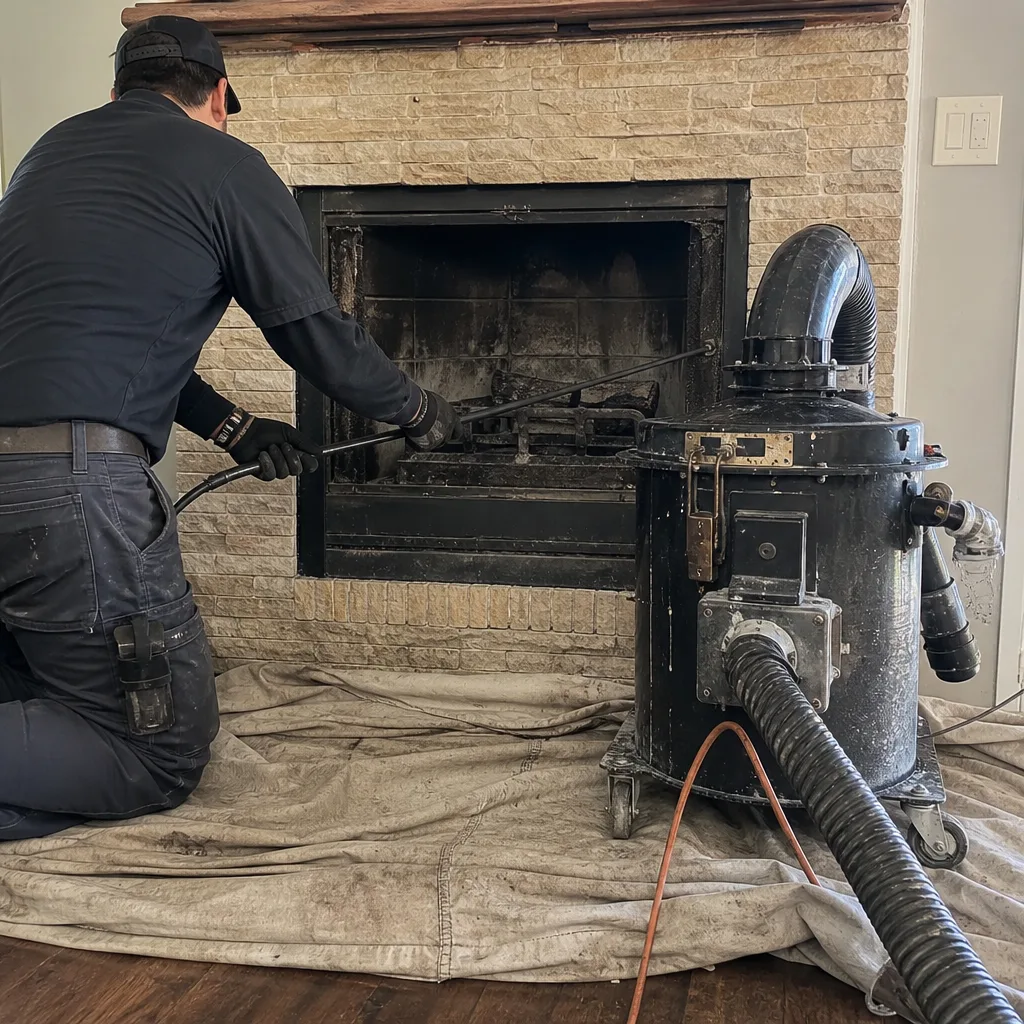
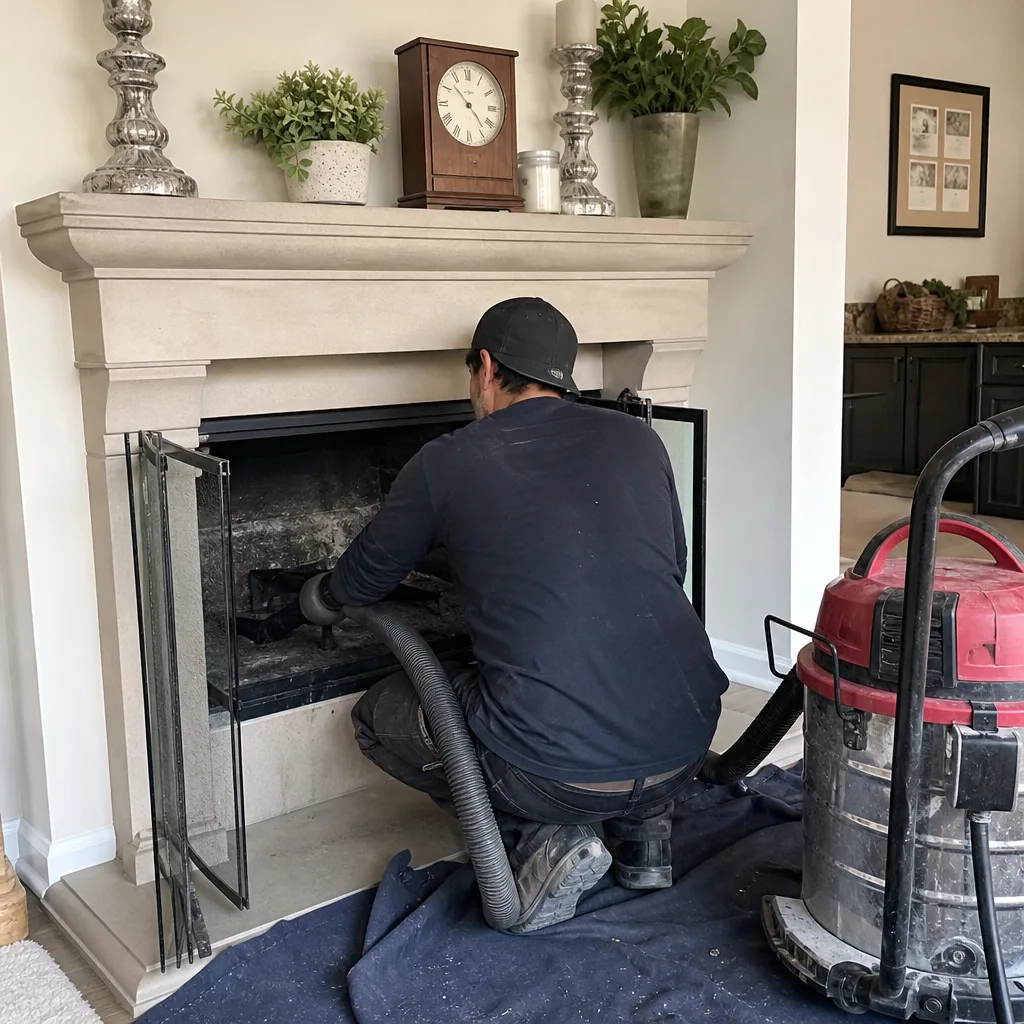
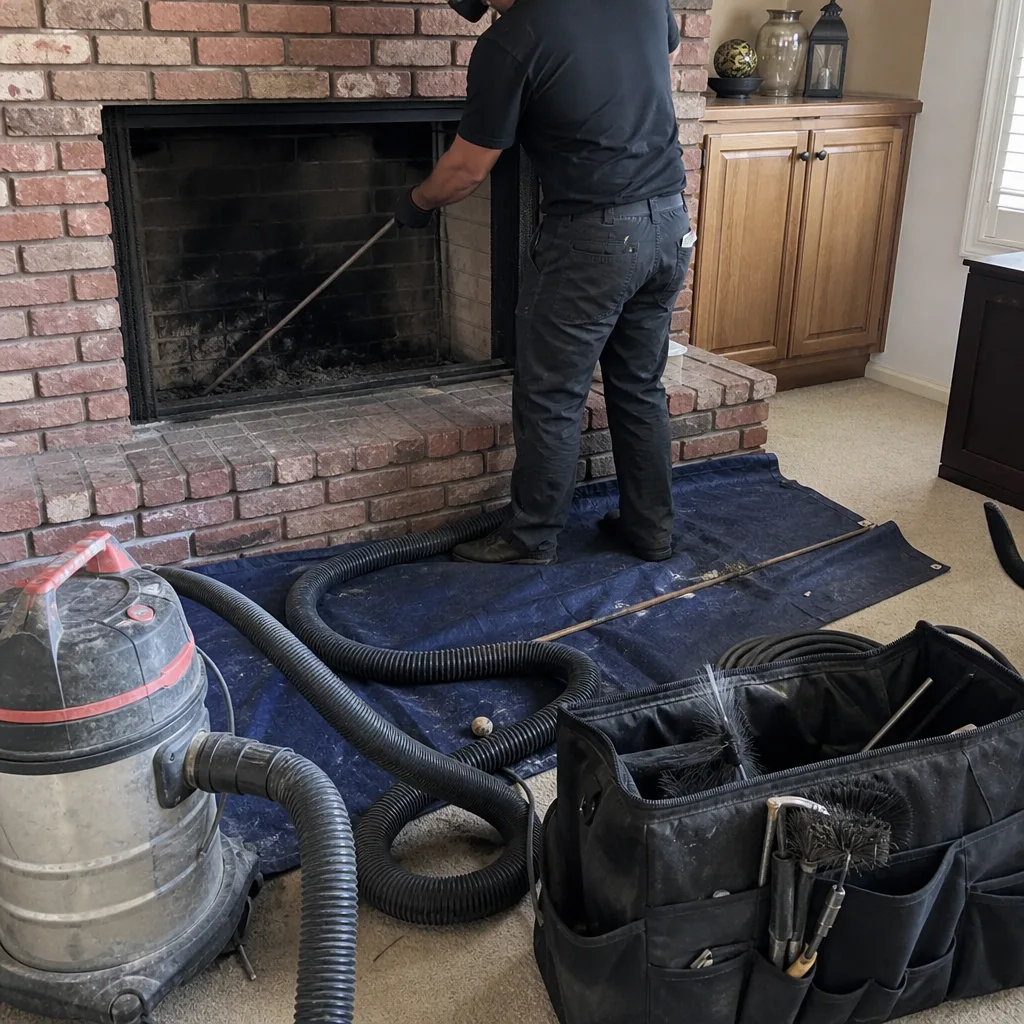
Level 1 sweep and inspection to the NFPA 211 annual standard - flue, crown, cap, and flashing checked and photographed
Chimney sweep logs do not sweep chimneys. They loosen some creosote - which then falls where a brush and vacuum still have to collect it.
Seasonal Chimney Cleaning Care for Temecula: Year-Round Homeowner’s Guide
In most of the country, chimneys rest through summer. In Temecula, summer is when the cap gaskets dry out, animals nest, and the mortar crown takes its worst UV abuse while the homeowner isn’t thinking about chimneys at all. We’ve swept thousands of Temecula flues, and the pattern is consistent: the damage that costs real money is almost always the damage that happened when nobody was looking. This guide lays out a Temecula-specific maintenance rhythm that accounts for our actual climate, our fire season overlap, our Santa Ana wind patterns, and our short but genuinely wet rainy season, and it pairs well with our Chimney Cleaning Emergency Preparedness Guide for Temecula Homes. By the end, you’ll know exactly what your chimney needs in each part of the year and what you can safely handle yourself versus what belongs in the hands of a specialist.
Styles & brands we work with
Quick Answer
The best time to clean a chimney in Temecula is early September, not October. This gets the flue ready before the first cold snap, before Santa Ana winds start stripping debris off roofs, and before wildlife finishes its summer nesting cycle inside uncapped flues. Homeowners should schedule a professional cleaning and inspection once every one to two years depending on burn frequency, with a visual check in June and a post-rain check in March.
Table of Contents
- Why Temecula Needs Its Own Chimney Calendar
- The Summer Problem: What Happens When Nobody Is Burning
- Santa Ana Season: Debris and Draft Disruption
- Rainy Season: When a Few Inches Does Real Damage
- The Optimal Cleaning Window for Temecula
- Syncing Chimney Maintenance With Other Exterior Work
- Common Mistakes to Avoid
- When to Call a Professional
- Frequently Asked Questions
- The Bottom Line
Why Temecula Needs Its Own Chimney Calendar
National chimney guides follow a predictable rhythm: clean in September, burn through winter, do a light inspection in spring, close the damper by May. That model works for climates with distinct seasons. Temecula does not have distinct seasons. We have a long, hot, dry stretch from May through October, a short and occasionally intense rainy window from December through March, and a fire season that technically overlaps with the time people are most likely to light their fireplaces. When you apply a Portland or Boston maintenance calendar to a Temecula chimney, you end up addressing problems six months after they started.
Our climate creates three distinct stress points that standard guides don’t adequately cover. First, the summer heat does more than dry out the vegetation around your home. It bakes the chimney crown, the mortar joints, and the rubber gaskets on factory-built caps. Expansion and contraction cycles happen daily from June through September, and each cycle opens microscopic gaps that were not there in April. Second, Santa Ana winds in October and November convert a minor creosote buildup into a draft problem as wind-driven air pressure changes force smoke back into living spaces. Third, our rainy season, even in a below-average year, delivers enough water to exploit every crack that summer created. By the time most homeowners schedule a cleaning in October, all three of these forces have already done their work.
What we recommend instead is a rhythm built around what Temecula actually does to a chimney throughout the year. That rhythm has four checkpoints: a June visual check, an early September professional sweep and inspection, a November pre-wind cap and damper check, and a March post-rain assessment. Each of these is cheap, quick, and aimed at a specific failure mode. Missing any one of them does not guarantee a problem. It just means you’re waiting for the problem to announce itself, and when a chimney announces itself, it often does so in the form of a chimney fire or a water-stained living room ceiling.
Our Oakridge Chimney Sweep home service area covers the full Temecula Valley, and the same seasonal logic applies whether you’re in a 1980s tract home near Winchester Road, a newer build in Harveston or Redhawk, or an older custom home in Meadowview or De Luz. The climate does not care when your house was built. It treats all flues equally.
The Summer Problem: What Happens When Nobody Is Burning
From June through September, a Temecula chimney is doing nothing from the homeowner’s perspective. No fires, no smoke, no visible activity. From the chimney’s perspective, this is the busiest season of the year, and everything happening is bad. First, consider the crown. The mortar slab at the top of a masonry chimney is the first line of defense against water intrusion. Temecula’s summer sun pushes surface temperatures on that crown well past 140 degrees. The mortar heats and expands during the day, then contracts at night as temperatures drop by 25 to 30 degrees. That daily cycle gradually opens hairline cracks. A crack that was invisible in May is a visible channel by August. That channel is exactly where December rainwater will enter.
Second, animals are active. Birds, squirrels, and raccoons all see a dark, quiet chimney as prime real estate during the summer. Chimney swifts are protected by federal law, which means if they nest in your flue, you cannot remove them until the young have fledged. We see this every year in Temecula: a homeowner calls in August because smoke is rolling back into the living room during a rare cool-night fire, and the culprit is a nest built two months earlier. An uncapped flue is an open invitation. Even a damaged cap with a torn gasket or a bent screen can let smaller birds through.
Third, creosote does not stay in a static state through summer. The creosote from last winter’s fires hardens and glazes, especially in our low-humidity environment. What was a soft, brushable deposit in March becomes a hard, tar-like layer by August. That changes the cleaning conversation entirely. Glazed creosote requires mechanical removal with rotary tools, not a standard wire brush. It burns hotter and more dangerously than fresh creosote. When a homeowner tells us they burned wood in February and “it was swept before that,” we remind them that the sweep removed what existed then. The summer hardened what was left behind.
Fourth, there’s the damper. Most dampers are cast iron or steel and sit just above the firebox. Four months of disuse, high heat, and low humidity does not damage the damper itself. But the hinges can seize from rust and soot corrosion. Linkages can break when forced. A damper that will not fully open makes every fire a smoke-management problem, and a damper that will not fully close means conditioned air escapes into the flue all year.
Summer checklist for Temecula homeowners
- Look up the flue from the firebox on a bright afternoon. You should see a cap or clean sky. If you see twigs, nesting material, or anything blocking light, you have a guest.
- Inspect the cap if you can safely see it from the ground. Bent mesh, rusted fasteners, or a missing section of screen means the cap needs replacement before fall. Binoculars work fine for this.
- Check the visible mortar crown from the ground or a ladder if you’re comfortable at height. If you can see cracks wider than a dime, plan for water damage over winter.
- Look for any white staining, called efflorescence, on the chimney’s exterior face. That white mineral residue means water has already penetrated the masonry.
- Test the damper. Open and close it fully. It should move without resistance and seat solidly in both positions. If it grinds or sticks, get it serviced before burn season.
None of these steps requires touching the fire, climbing onto the roof, or spending money. All of them take ten minutes total. What they give you is a clear read on whether your chimney can wait until September or needs attention now. In our experience, roughly one in four Temecula chimneys we inspect in June has some issue that would have worsened significantly by fall.
Santa Ana Season: Debris and Draft Disruption
Santa Ana winds arrive in Temecula reliably between October and December, with some wind events reaching sustained speeds of 35 to 45 miles per hour with higher gusts. These winds are unique in the relationship they create between your roof, your chimney, and the air inside your home. A strong Santa Ana event creates negative pressure zones on the leeward side of structures, which pulls air out of any opening it can find. An uncapped or poorly capped chimney is exactly that opening. The symptom is smoke backing into the home during an otherwise normal fire, but the longer-term issue is what the wind leaves behind in your flue when it’s not in use.
During a Santa Ana event, leaves, roofing granules, small branches, and the accumulated debris from nearby trees are lifted and carried across rooflines. A properly fitted cap with intact mesh screens intercepts this material. A missing cap, a cap with screen holes larger than a centimeter, a cap that has shifted out of position, or a cap whose gasket has dried and torn, does not. The wind effectively steers this debris directly down the flue. We have removed enough tumbleweed fragments, palm frond sections, and roof debris from Temecula flues to know that Santa Ana is not a theoretical concern. It is a regular, predictable delivery mechanism.
The debris itself causes two problems. The obvious one is blockage: enough dry material in the flue creates a direct path for heat to ignite the material when you light a fire. Dry leaves and twigs burn instantly and can start a chimney fire in a flue that has only minimal creosote. The less obvious problem is draft disturbance. Even a partial blockage changes the way air moves through the chimney. A flue that drafted perfectly in February may not draft correctly in November because a cluster of leaves has changed the air path. You cannot always see this from below. It requires a top-down inspection or a camera run.
What to check before wind season peaks
- Confirm the cap is attached and aligned. Any visible gap between the cap base and the flue tile means wind and debris are entering.
- Screen mesh should be intact across the entire cap, with holes no larger than 5/8 inch on standard caps and 3/4 inch on larger flues. Torn screen sections need replacement, not repair.
- Look for signs of wind-driven smoke in the firebox, which means staining on the damper plate or the firebox walls above the lintel from the previous season. That tells you the existing draft system was already marginal.
- If you have a factory-built metal chimney, check the chase cover for warping or lifted sections. High winds can flex these thin metal tops and create gaps.
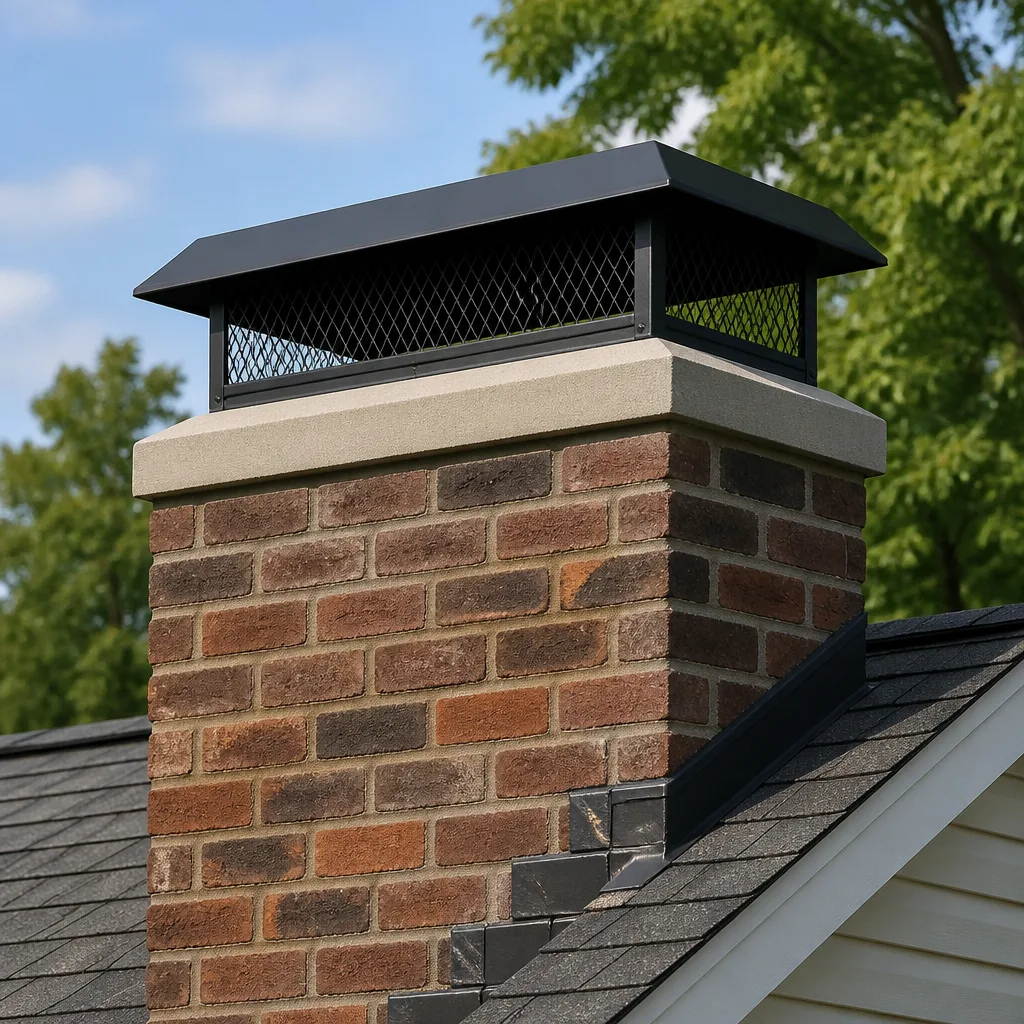
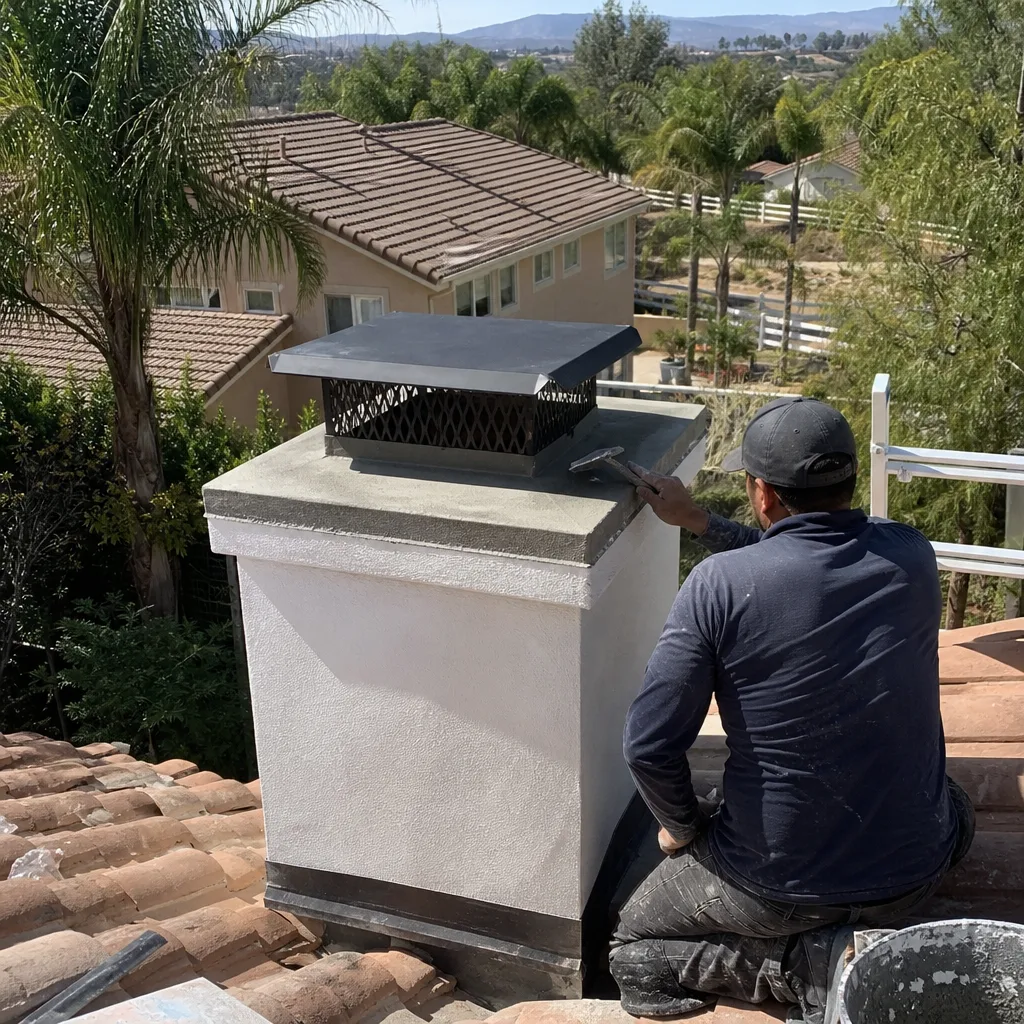
One thing to understand clearly: caps are not decorative. A cap is the single most cost-effective protective device on your chimney. It keeps out animals, keeps out debris, and blocks the downdrafts that Santa Ana winds regularly force into Temecula flues. The cost of a quality cap is a fraction of the cost of a flue fire cleanup or a damaged liner replacement. When we install caps, we use trade-grade hardware from Olympia Chimney and Famco because these are the brands chimney specialists stock, not what you find hanging on a hook at the hardware store. The difference is in the gauge of the metal and the quality of the screen. A cheap cap from a big-box store will not survive two Santa Ana seasons in Temecula.
Rainy Season: When a Few Inches Does Real Damage
Temecula averages roughly 13 inches of rain per year, and most of it falls between December and March. That number seems small to anyone from the Pacific Northwest or the Gulf Coast, which is exactly why the damage catches Temecula homeowners by surprise. It does not take a flood to destroy a chimney. It takes a small, steady supply of water entering a crack that no one has seen. And that water is patient. A compromised chimney in Temecula can absorb more water in one wet December than an identical chimney in a rainier climate because our dry months have already created the entry points and our clay flue tiles are especially vulnerable once that water gets inside.
The most common failure we see after a wet Temecula winter is tile spalling, where the interior surface of a clay flue tile flakes away in thin shards. This happens when water soaks into the porous tile body and then the heat of a fire causes that trapped water to expand and push the tile face off. You’ll see the evidence as thin, curved pieces of clay accumulating on the smoke shelf or in the firebox. Once a tile has spalled, the flue is compromised. It will continue to shed material, and the gaps created allow heat to reach areas of the chimney structure that were never meant to handle it.
Rain also accelerates damage in ways that have nothing to do with burning. Water running down the inside of a flue dissolves creosote and carries it into the smoke chamber, where it stains the brick and leaves a varnish-like coating that smoke particles cling to even more readily. Water in the chimney’s masonry freezes rarely in Temecula, but the wet-dry cycle is still destructive. Moisture expands mineral salts in the brick and mortar, which causes the white efflorescence you see on exterior chimney faces after rain. On the roof side, a saturated mortar crown that dries too quickly in January sun can crack more deeply than it would have without the water exposure.
Post-rain inspection steps
- After the first substantial rain, look at the chimney’s exterior from all visible angles. Any new water staining on brick or stone means the water is running down the outside instead of being shed properly.
- Check the fireplace interior for rust streaks on the damper, which indicate water was running down the flue.
- Run a camera inspection if you skipped the fall sweep. The camera will show efflorescence inside the flue, which looks like white chalky patches on the tile surface, and it will show whether any water is pooling on the smoke shelf.
- If you burn a fire after rain and the fire crackles or pops more than usual, or if you notice a damp, mineral smell coming from the firebox, water is present somewhere in the system.
One Temecula-specific consideration: our rain often arrives in a few concentrated bursts rather than steady drizzle. A January storm that drops two inches in an afternoon will expose a failing crown or cap seal faster than a month of light rain. If the wind and rain combine during a storm, water is not just falling onto the crown; it is being driven sideways into any gap between cap and flue. After any wind-driven rain event, a quick firebox check is worthwhile even if you checked the chimney two weeks earlier.
The Optimal Cleaning Window for Temecula
National chimney guides will tell you to clean in October. For Temecula, that is late. The optimal window is the first half of September. Here is the reasoning. By early September, the summer wildlife nesting season has essentially ended. Birds have fledged, squirrels have moved on to their autumn routines, and any nest that was built in your flue is now empty and removable. If you clean in October, you are working around whatever the wind has started depositing. If you clean in late November, you are competing with everyone else in the valley who just remembered their fireplace exists. Chimney service companies in Temecula are at peak capacity from October through December, and scheduling becomes less flexible. Cleaning in early September gets you on the calendar when availability is open and gets your flue ready before the first genuinely cold evening.
September is also the right time because it creates a clean baseline before the two biggest sources of new contamination arrive. Santa Ana winds start depositing debris in October. Winter burning, whenever it begins for you, starts adding fresh creosote. If you sweep in September, then anything the camera finds in March is a measurement of one season’s use, not a buildup of two. This is how we approach our own recommendations for Temecula homeowners: one professional sweep and inspection per year for houses that burn occasionally through winter and more frequently for households that burn four or more nights per week from November through February. A household that burns daily should plan on two sweeps per season: one in September and one in late January or February, when the season’s creosote has accumulated but before the last stretch of cold evenings.
There is also a straightforward economic reason to choose September. Creosote removal is less expensive and more thorough when the creosote is fresh. The soft, flaky stage-one and stage-two creosote that builds up over a single season is removed completely with standard brushing. Once a Temecula summer has hardened that material into glazed stage-three creosote, the removal process involves rotary chains, a different chemical treatment, or both. You are paying more to remove the same material because you waited through the hot months. This is why our recommendation and our practice is the same: schedule the sweep before the heat has finished its work on last year’s residue, not after. For a detailed look at pricing, see our Chimney Cleaning Cost Breakdown: The Temecula Homeowner’s Reference for 2026.
Syncing Chimney Maintenance With Other Exterior Work
Chimney maintenance does not exist in isolation. The chimney penetrates the roof, which means it shares a structural system with your roofing, your gutters, your attic ventilation, and your flashing. Temecula’s climate treats all of these surfaces with the same sun, wind, and rain. We recommend a specific order of operations that will save you both time and money by consolidating contractor visits and catching problems before they require separate trips.
The recommended Temecula exterior maintenance sequence
- Roof inspection first. Any roofer will need to walk the roof surface, check valleys and flashing, and evaluate granule loss. Have them note the condition of the chimney crown, cap, and flashing while they’re up there. This is not a chimney diagnosis, but it gives you a head start.
- Gutter cleaning either immediately before or after the chimney sweep. Santa Ana winds fill Temecula gutters with debris at the same time they deposit debris into chimneys. It is inefficient to clean the flue in September and wait until November to clean gutters when both systems are affected by the same seasonal force.
- Chimney sweep and inspection second. A functioning flue is easier to assess when roof debris has not yet fallen back onto the roof surface and into the chimney chase. Schedule the sweep within two weeks of the roof inspection.
- Dryer vent cleaning at the same visit. If the technician is already at your home for the chimney, having the dryer vent cleaned during the same appointment consolidates two of the leading household fire-hazard sources into one scheduled visit. The dryer vent is in the wall behind your dryer and has no seasonal dependence, but it accumulates lint year-round and should be cleared at least once per year. We clean both because both are venting systems, and both fail in ways that cause house fires.
This sequence works because it respects the actual timeline of how Temecula weather stresses a home. The roof suffers through summer UV. The gutters load up during Santa Ana season. The chimney suffers through all of it simultaneously. There is no reason to have four different contractors visit your home on four different days when two coordinated visits can address all of it, with the chimney professional handling the flue and cap and the roofer handling the surfaces around it.
For homeowners in communities like Paseo del Sol, Morgan Hill, or Temeku Hills, where many homes are on tight lots with high roof pitches, the consolidation benefit is even stronger. A single crane or aerial ladder setup can serve both the roofer and the chimney technician. You are reducing the number of times heavy equipment touches your property, and you are catching a crown problem through the roofer’s eyes even before we arrive with our own camera.
Common Mistakes to Avoid
- Waiting until the first cold snap to schedule a sweep. Every chimney company in Temecula is booked solid during the first cold week of November. The homeowners who call then wait two to four weeks for an appointment, and some of them burn anyway with a flue that has not been inspected. That is a decision made out of inconvenience, not safety.
- Assuming no fires means the chimney is fine. Summer is the most damaging season in Temecula for a chimney, not the least. The UV exposure, the animal activity, and the creosote hardening continue regardless of whether you light a match. A chimney that has not been used in five years can still have a cracked crown, a blocked flue, and water damage.
- Using the fireplace with a damper that will not fully open. A partially open damper sends smoke into your home and creates a backdraft risk, especially during a Santa Ana event. The damper problem you ignored in July becomes a house-full-of-smoke emergency in November.
- Treating a cap as an optional accessory. In Temecula’s wind and wildlife environment, an uncapped chimney is a liability. We have removed nests, dead animals, and enough debris to fill a wheelbarrow from flues that had no cap or a failed cap. The cap costs less than the service call to remove what it would have kept out.
- Ignoring water stains after rain. Water stains near the chimney on ceiling drywall are the clearest indicator that your flashing or crown has failed. The water that made that stain may have been working its way down your flue for months. By the time it shows on drywall inside the home, the chimney side of the problem is well established.
- Burning wood that has not been seasoned. Wet wood creates cold, smoldering fires that deposit creosote at an accelerated rate. Green or unseasoned wood can triple the amount of creosote deposited per burn compared to properly seasoned wood, and that wet wood also produces more smoke that condenses more readily on the flue walls. In Temecula’s dry climate, wood seasons well if stored correctly, but a one-year-old stack that has been sitting in shade on damp ground is not seasoned even if it was split on time.
- Attempting a DIY chimney cleaning as a first-time fix. We understand the appeal, and we know hardware stores sell chimney brushes. What they do not sell is the ability to interpret what the brush brings down, what the flue looks like after cleaning, or whether the deposit on your walls is creosote, soot, or the residue of a prior chimney fire. A professional camera inspection is the difference between cleaning a flue and verifying the flue is safe.
When to Call a Professional
There are specific points where the right move is to stop looking and start calling. If you see shards of clay flue tile in the firebox, call. That is spalling, and it means the liner has begun to fail. If you smell a strong, campfire-like odor in the house on a hot day, especially in rooms that share the chimney wall, call. That odor means air is moving down the flue and carrying last season’s residue with it. If you notice rust on the damper or the firebox, call. Metal does not rust in a dry chimney. If your chimney has visible cracking on the exterior masonry, if water has appeared around the ceiling near the chimney chase, or if you hear animals in the flue at night, call. Any cap that is visibly damaged, missing, or shifted after wind, call. A flue that has not been inspected in more than eighteen months in a home where fires are lit regularly, call. Oakridge Chimney Sweep offers free estimates in Temecula, call (866) 563-3051.
Frequently Asked Questions
Once per year for most homes, with the cleaning scheduled in early September before wind season and before the first cold snap. Households that burn four or more nights per week during the November through February stretch should plan on a second cleaning in late January or early February. The determining variable is creosote depth: anything over 1/8 inch means the flue is due for cleaning regardless of the calendar. Call (866) 563-3051 for a no-cost inspection and an honest read on whether cleaning is due now.
Creosote accumulates in layers. Over multiple burning seasons, those layers compress into a dense, tar-like material that is difficult and expensive to remove, and that burns at much higher temperatures than fresh creosote. The flue narrows, which degrades draft and pushes smoke into the house. Water intrusion goes unaddressed, which damages the clay liner. A chimney that has been neglected for three or more years in Temecula often needs more than a sweep. It needs a camera assessment to determine whether the liner is still sound. Delaying the sweep makes the eventual repair more extensive.
Yes, and for three specific Temecula reasons. First, the summer nesting season has ended, so any wildlife material in the flue can be removed legally and completely. Second, Santa Ana winds have not yet begun depositing fresh debris, so the September cleaning is working with a clean baseline. Third, scheduling in September means getting an appointment without the October through December rush, and it beats the heat-hardening of last season’s creosote that happens through August and September. The difference in the condition of the flue between a September 5th and an October 20th cleaning can be significant, and it always favors the earlier date.
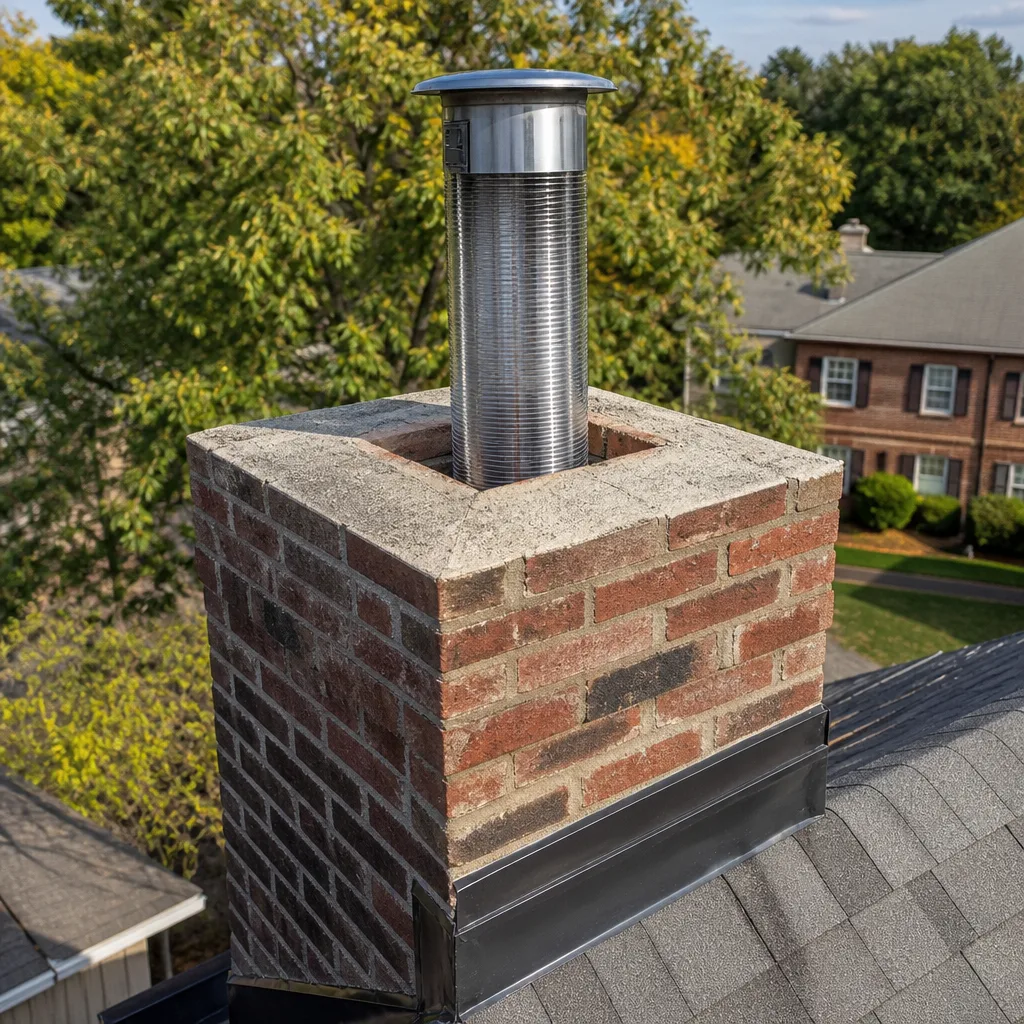
You should never accept a liner replacement recommendation without seeing visual evidence. A camera inspection shows the interior of the flue in detail: cracks, spalling, water damage, or previous fire damage. If the camera shows a flue with hairline cracks or minor spalling but the structural integrity is still sound, a product like HeatShield can restore the surface without full liner replacement. That option is one reason we stock HeatShield alongside our DuraFlex liner inventory. For older Temecula chimneys with offset or irregular flues, a flexible DuraFlex liner allows a proper liner installation that rigid liners cannot accommodate. The answer to “do I really need a new liner” should always be supported by footage you have watched with your own eyes. If no one will show you the camera, get a second opinion.
The answer depends on your flue size, the number of flues in the chimney, and whether you have a masonry or factory-built chimney. For masonry chimneys in Temecula’s wind environment, we usually recommend a stainless steel cap with a full coverage hood and tightly fitted screen mesh sized to your exact flue dimensions. We source caps from Olympia Chimney and Famco because these are the brands chimney technicians use when they install on their own homes. A properly fitted cap made of heavier gauge stainless will outlast the lighter big-box options by years in Temecula’s sun. For factory-built chimneys, the cap is more specialized and must match the manufacturer’s listed system.
Yes. We clean both, and we recommend doing them on the same visit whenever possible. The chimney and the dryer vent are both venting systems, and both are among the leading causes of household fires when they are neglected. For the same scheduling logistics that make September smart for the chimney, bundling both services reduces your coordination time and means one service window instead of two. Whether you have the chimney swept or the chimney repaired, our technician can clear the dryer vent before leaving.
The Bottom Line
Temecula’s climate does not follow the national chimney care template, and neither should your maintenance schedule. Summer is the season of hidden damage. Santa Ana winds deliver debris into any flue that is not properly capped. The rainy season finds every crack the dry months opened. The single most useful thing a Temecula homeowner can do is simple: schedule the chimney sweep in early September and make sure a camera inspection is part of the job. From there, a June visual check, a November cap verification, and a March post-rain look at the firebox cover the full year. That rhythm costs almost nothing and prevents the expensive problems. Oakridge Chimney Sweep has been serving Temecula since 2011, working on chimneys and vents the same way we would want them worked on if they were attached to our own homes, with honest inspection notes, trade-grade materials from brands like DuraFlex, HeatShield, Olympia Chimney, and Famco, and no recommendations we cannot support with camera evidence.
Written by the team at Oakridge Chimney Sweep, serving Temecula since 2011.
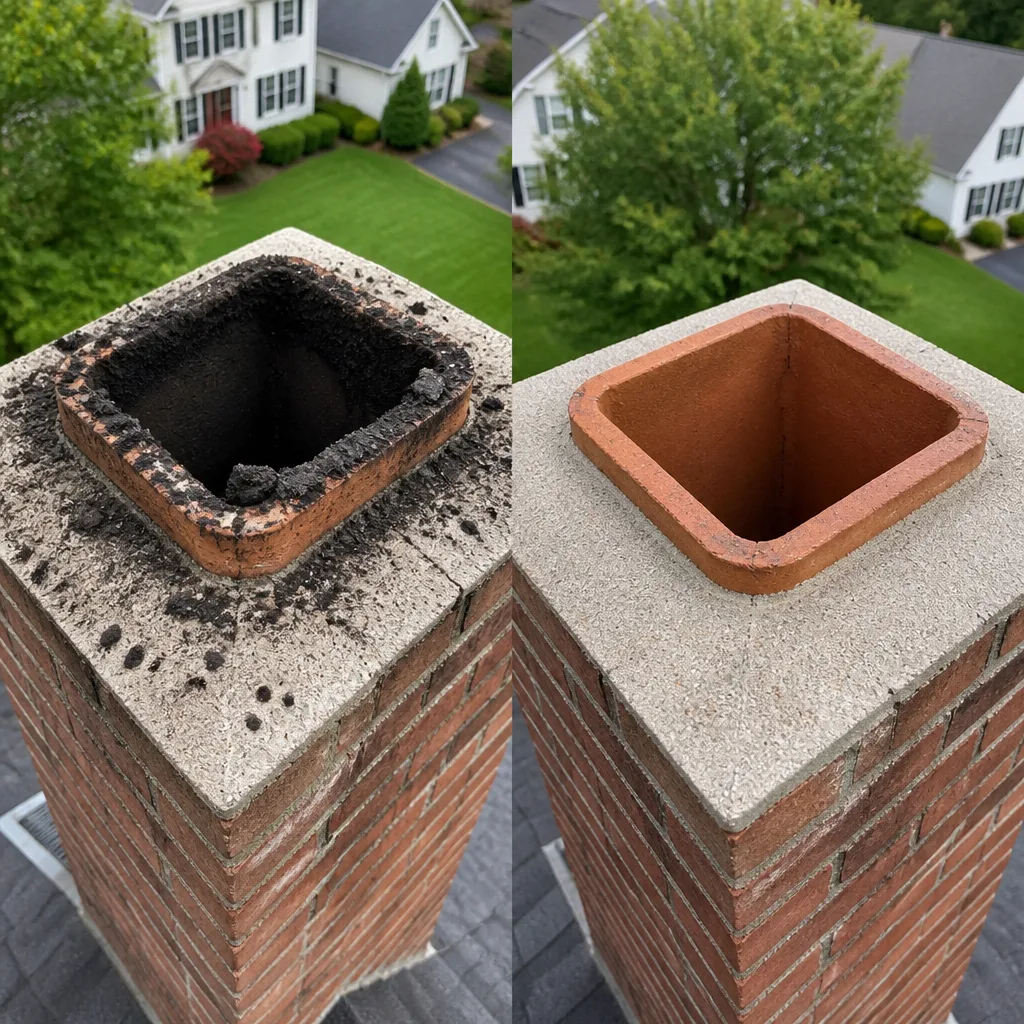
See the difference
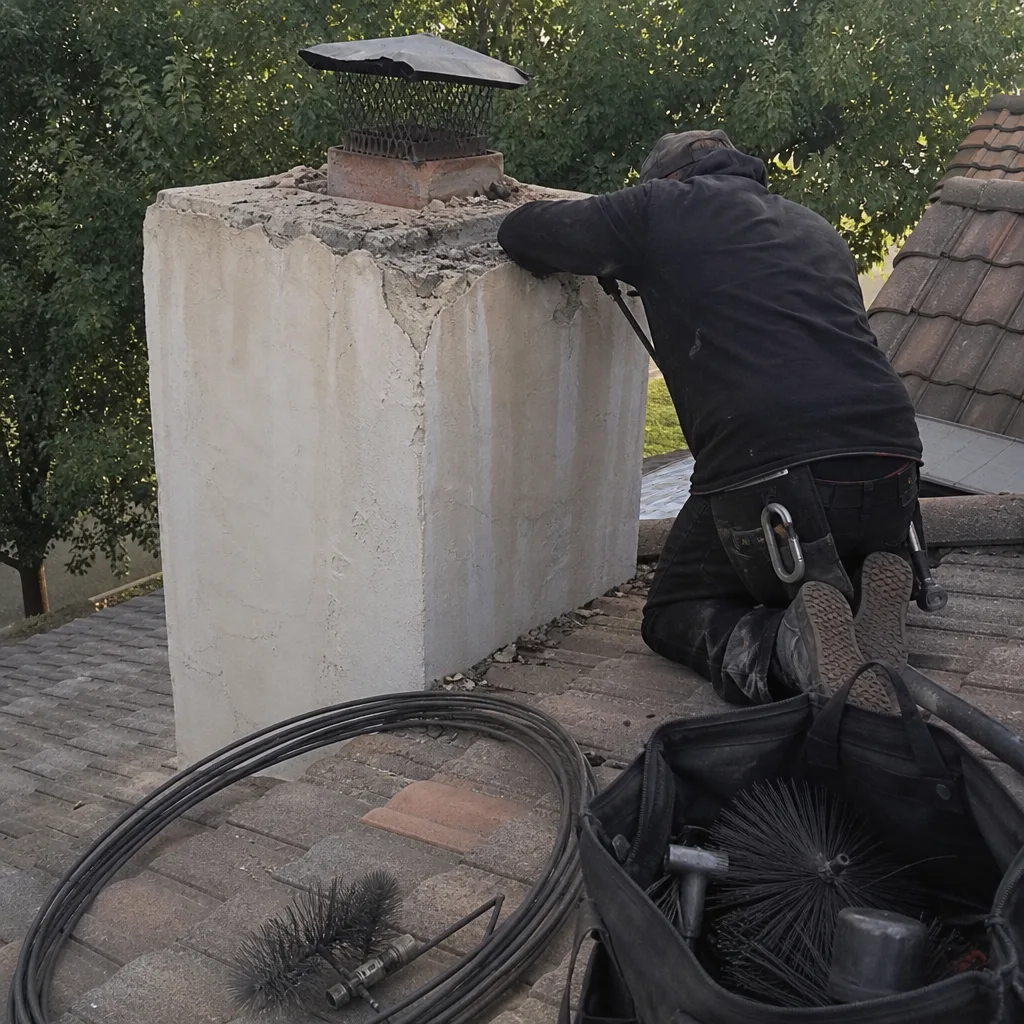 Before
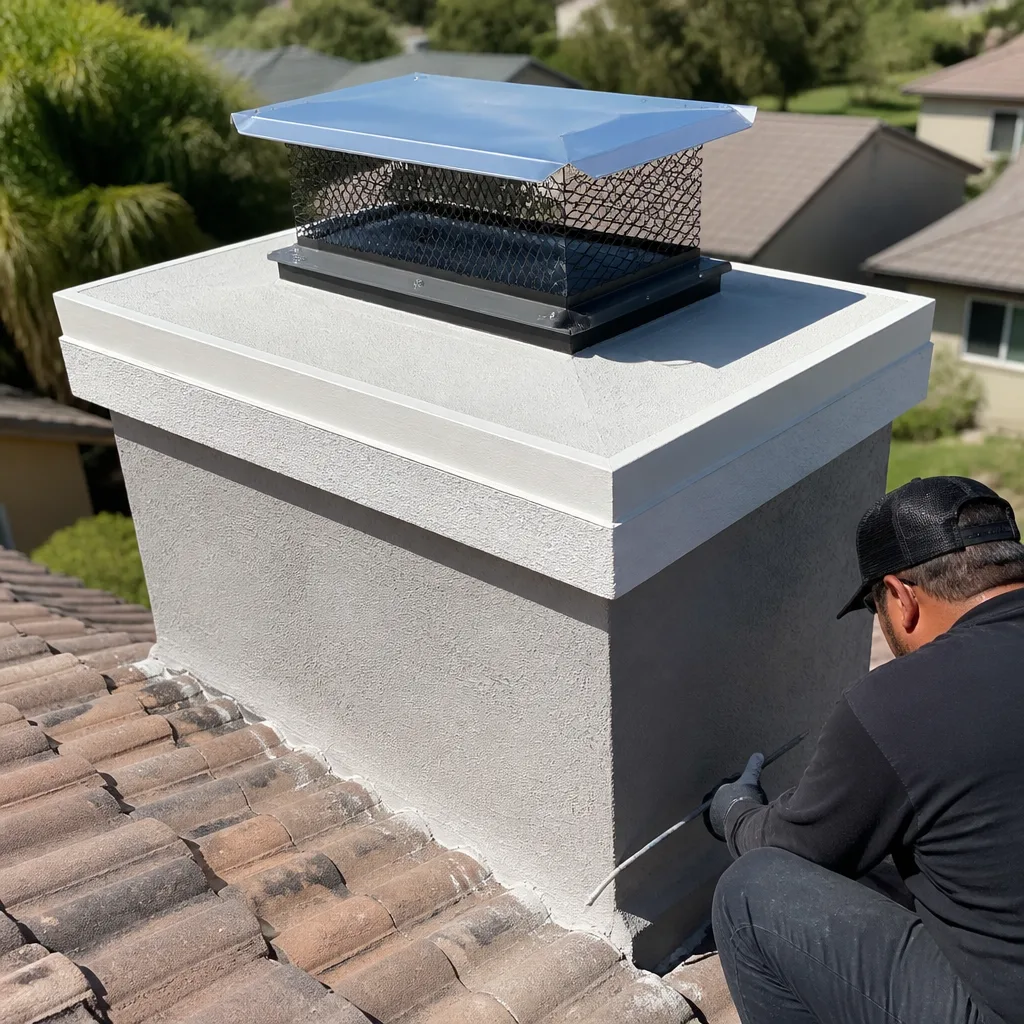 After
 Before
 After
 Before
 After