
Last updated October 30, 2026
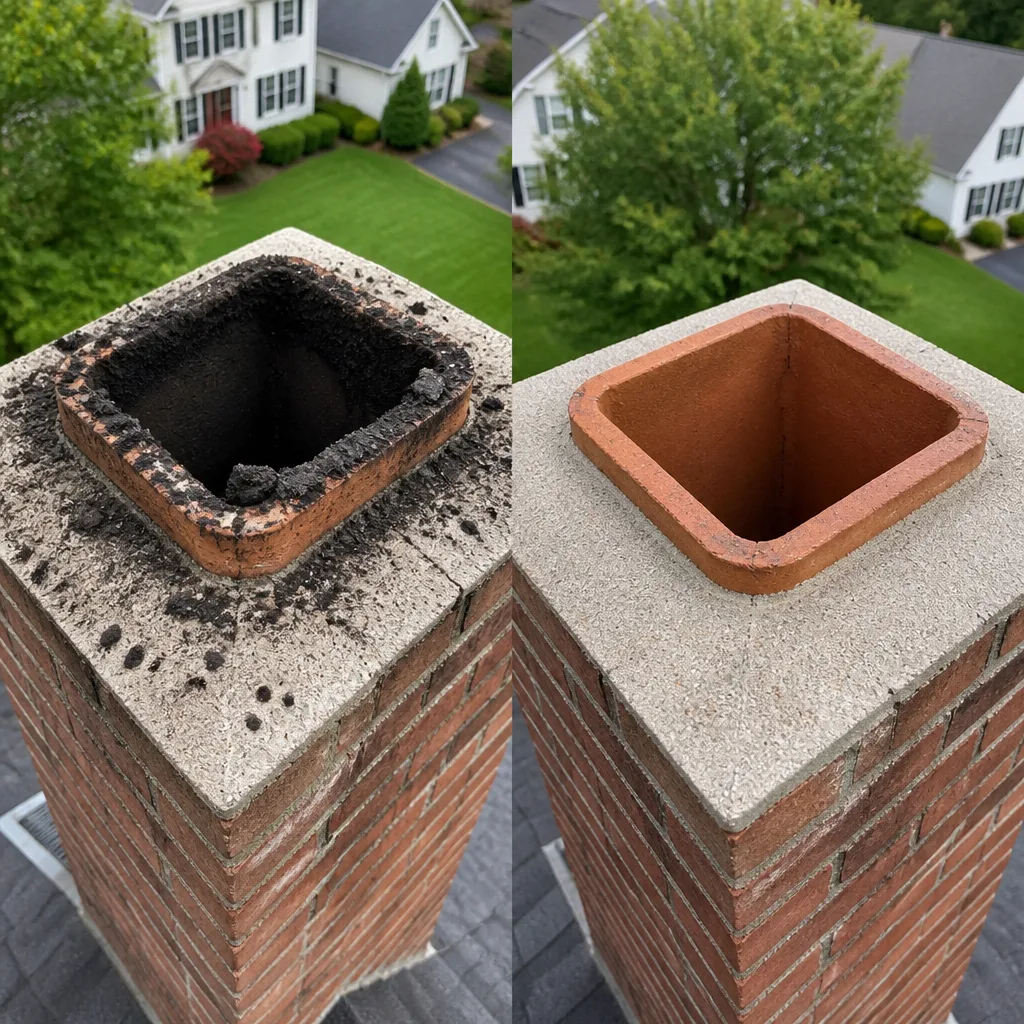 Sweep & inspection
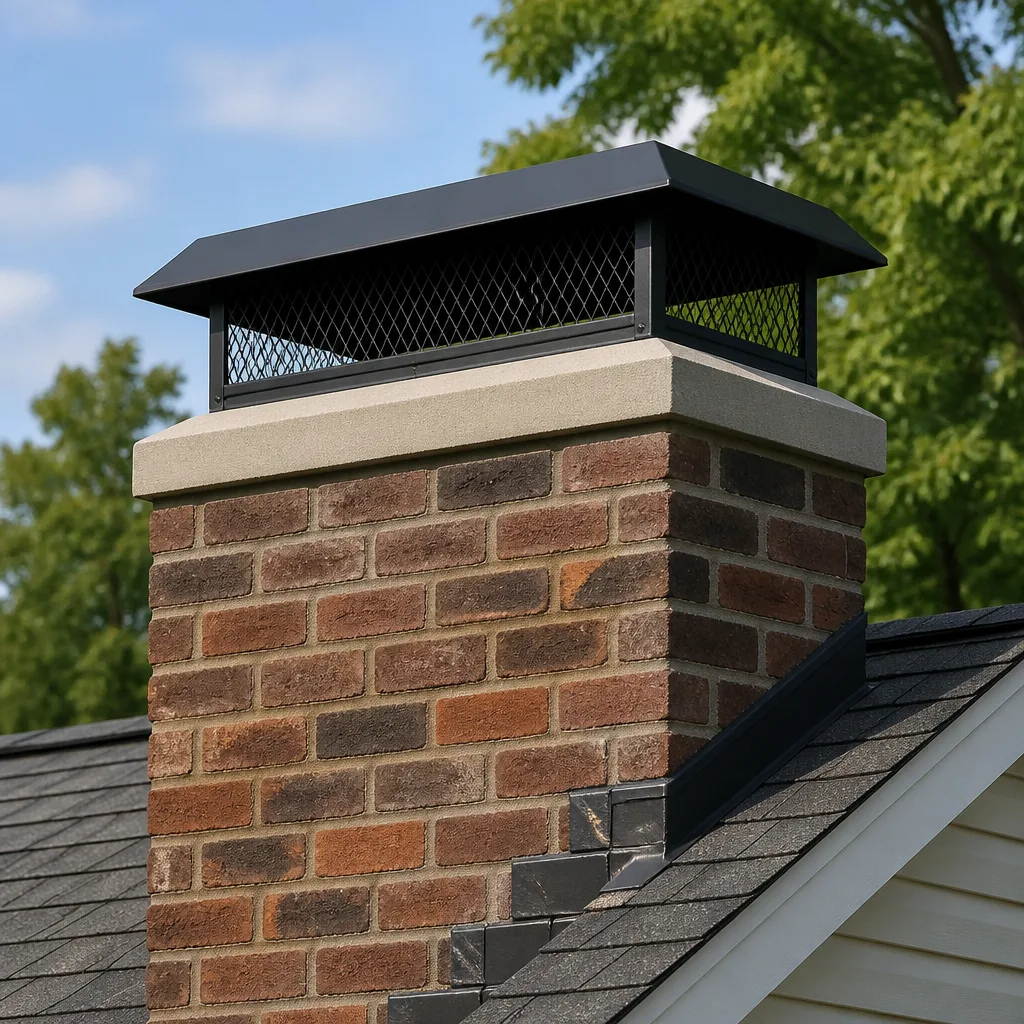 Caps & crowns
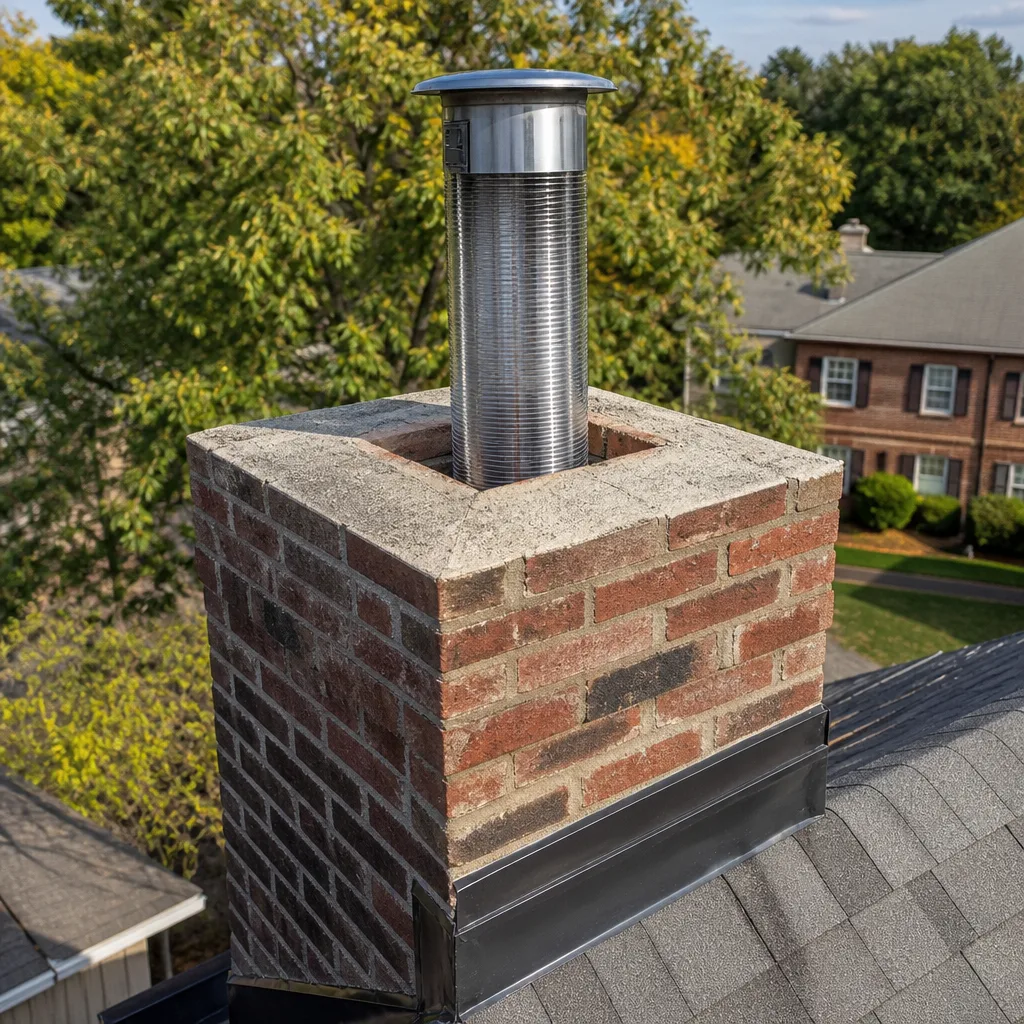 Flue relining
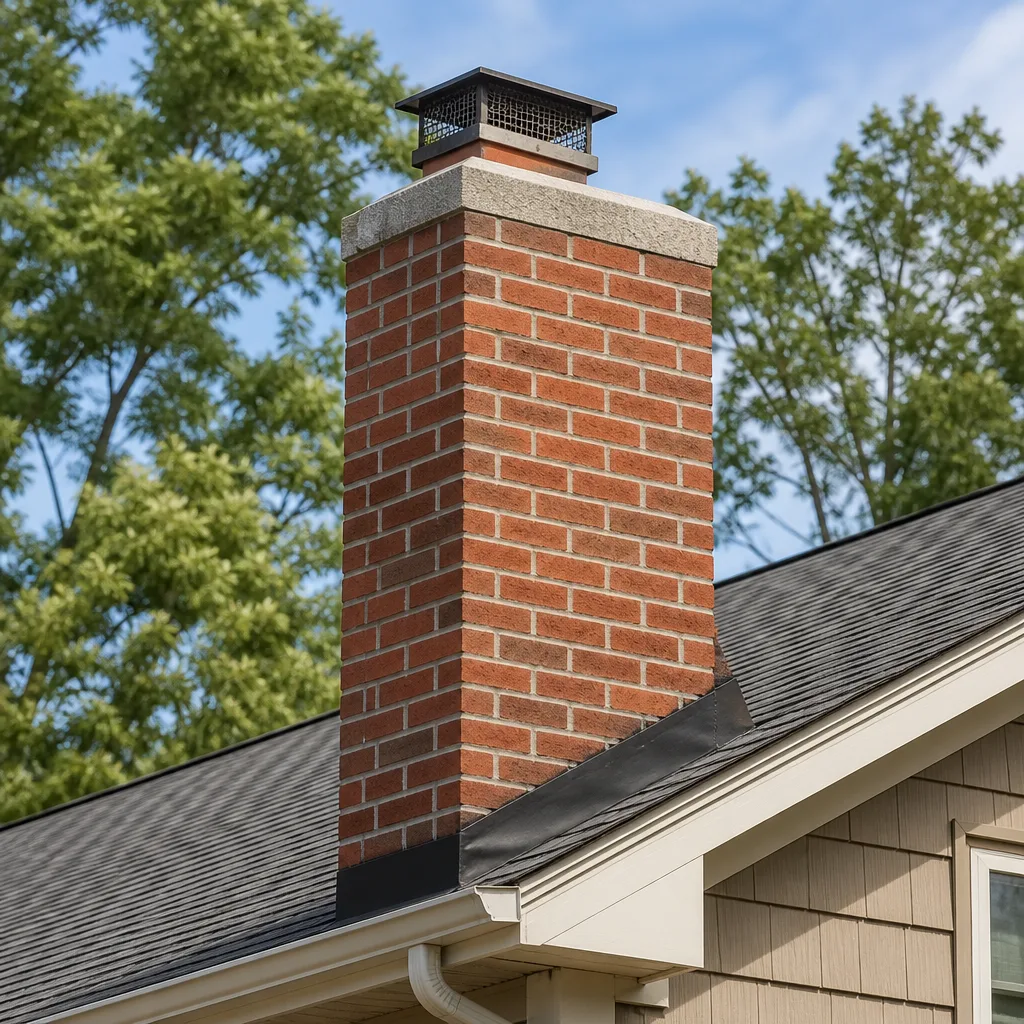 Masonry repair
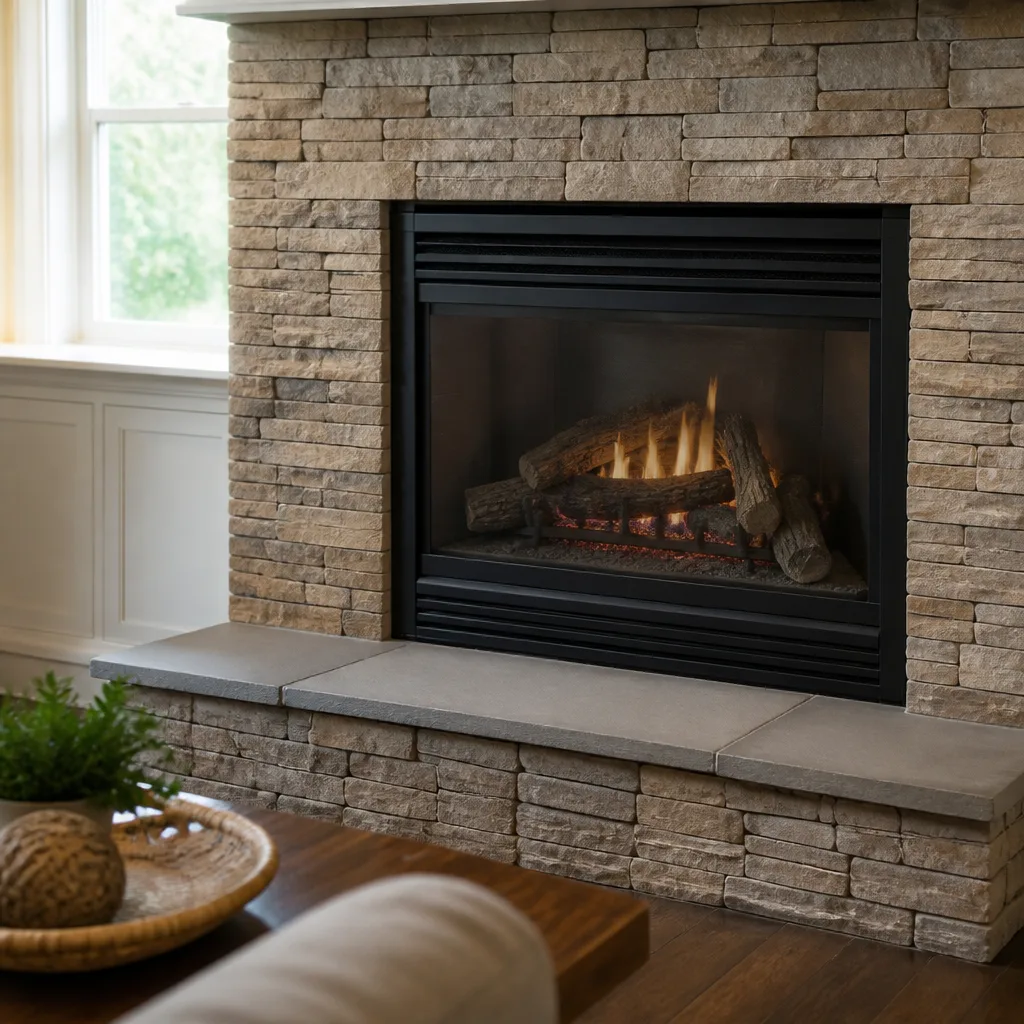 Gas fireplace service
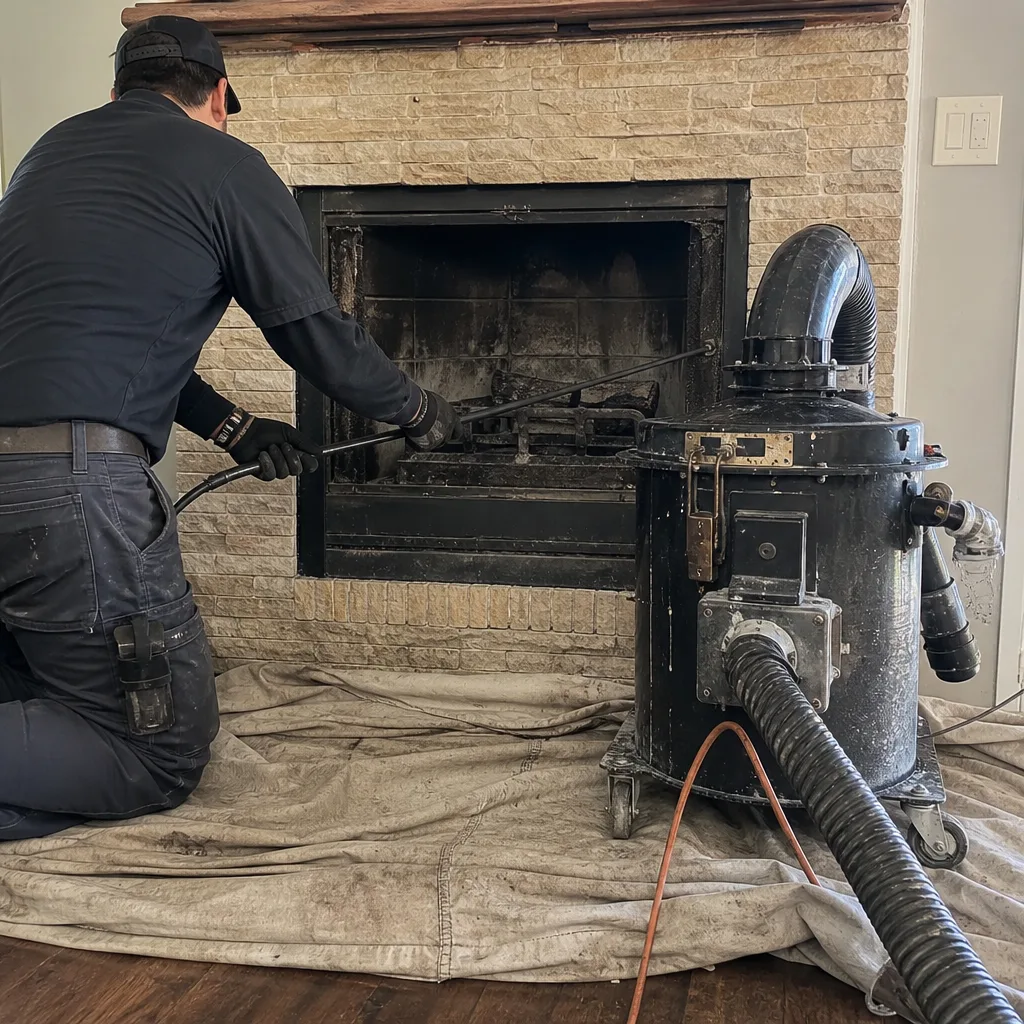
Level 1 sweep and inspection to the NFPA 211 annual standard - flue, crown, cap, and flashing checked and photographed
Chimney sweep logs do not sweep chimneys. They loosen some creosote - which then falls where a brush and vacuum still have to collect it.
DIY vs Professional Chimney Cleaning: The Temecula Homeowner’s Decision Guide
Wood burning in Temecula isn’t a winter tradition the way it is in the Northeast or Midwest. But plenty of homes in this valley still have masonry fireplaces and wood stoves, and those systems collect creosote exactly the same way they do in colder climates. Here’s the detail most guides skip: a homeowner with a straight flue, modest access, and the right rod-and-brush setup can absolutely remove first-degree creosote successfully. What they can’t do is confirm whether that creosote is actually first-degree before they start, or see what the soot is hiding behind it. This guide walks the exact line between what a Temecula homeowner can handle on a Saturday and what genuinely needs professional equipment, professional inspection, and professional judgment. For related reading, see our How to Hire a Chimney Cleaning Contractor in Temecula: A Step-by-Step Guide. By the end, you’ll know which side of that line your chimney sits on.
Quick Answer
DIY chimney cleaning is reasonable for a single-story home with a straight flue, light first-degree creosote buildup, and a homeowner comfortable working on a roof. Professional cleaning becomes the honest choice the moment any of these is true: you can’t confidently identify the creosote degree before starting, your flue has one or more offsets, you’re on a two-story roof with any real slope, or the chimney hasn’t been inspected in more than two years. The reason isn’t skill snobbery. It’s what you can’t see from the top of the flue with a hardware-store brush.
Styles & brands we work with
Table of Contents
- The Three Creosote Degrees: What You’re Actually Dealing With
- The Equipment Reality: What a Hardware Store Brush Can and Can’t Do
- The Inspection Gap: Why Cleaning Is Only Half the Job
- When DIY Chimney Cleaning Genuinely Works in Temecula
- When Self-Cleaning Becomes a Liability
- The Honest Math: DIY Clean Plus Inspection vs. Professional Service
- Liner Reality: What Temecula Homeowners Usually Discover When the Soot Comes Off
- What Actually Happens If You Skip It: Chimney Fires, Carbon Monoxide, and Temecula’s Climate
The Three Creosote Degrees: What You’re Actually Dealing With
Creosote is the condensed residue of wood smoke. Every wood fire produces it, and how much accumulates depends on burn temperature, wood moisture, and how often you use the fireplace. The National Fire Protection Association (NFPA) and the Chimney Safety Institute of America (CSIA) both structure their guidance around three degrees of creosote buildup. If you can’t identify which one you’re looking at before you pick up a brush, you’re working blind. Here’s what each degree means, translated into what it actually looks like inside a Temecula flue.
First-degree creosote is a light, dusty, flaky soot that brushes off easily. It forms when the fire is hot and the flue gases are warm enough to carry most moisture out before it condenses. It looks like flat black dust or very thin soot, and a stiff nylon or poly brush in a rod-and-brush kit removes it in one or two passes. This is the only degree where homeowner DIY cleaning is genuinely reasonable, and even then, only when the flue is straight and accessible. Most occasionally used Temecula fireplaces that burn seasoned oak or gas logs stay in this range, provided the homeowner doesn’t smolder fires or burn wet wood.
Second-degree creosote is what happens when first-degree soot gets repeatedly baked and re-coated. It looks like shiny black flakes or brittle, crumbly buildup, sometimes with a granular texture like coarse sand. It doesn’t brush off with a nylon brush. It needs a wire brush or a poly brush with aggressive barbs, and in some cases a rotary cleaning system using steel whips or chains. DIY is technically possible here with the right equipment, but the margin for error shrinks. If you can’t see the entire flue length and confirm you’re removing it all, you’ll leave behind a patchy residue that becomes a new fire-load in half a season.
Third-degree creosote is the dangerous one. It appears as a hard, shiny, glaze-like coating, often with a tar-like look or a puddled, honeycomb texture. It forms when creosote bakes at high temperatures until it becomes a concentrated fuel. Third-degree creosote cannot be removed by homeowner brushing, period. It requires rotary chain systems, chemical treatments such as those used by professional sweeps, or in severe liners, mechanical removal followed by a professional assessment of whether the flue is even worth keeping. If you see glassy, shiny buildup in your flue, stop, close the damper, and call a professional. Attempting to brush third-degree creosote with a hardware kit will either do nothing or, worse, break the glaze into chunks that fall and pack the smoke shelf, creating a new blockage you can’t see from the top.
Temecula’s climate matters here. The valley’s relatively low humidity and warm days mean creosote cures faster than it does in damp coastal air. A fireplace used a dozen times a winter in Temecula can accumulate second-degree creosote faster than the same usage in, say, a beach city. Dryness accelerates the baking process. That’s not a scare tactic, it’s chemistry: low humidity plus low burn rates equals more of that flaky, crusty second-degree stage. Homeowners who only burn a few fires a year and never inspect the flue often assume they have nothing to clean. Some of the worst second-degree buildup we’ve seen in Temecula homes came from fireplaces used only sporadically but never swept over a decade.
The Equipment Reality: What a Hardware Store Brush Can and Can’t Do
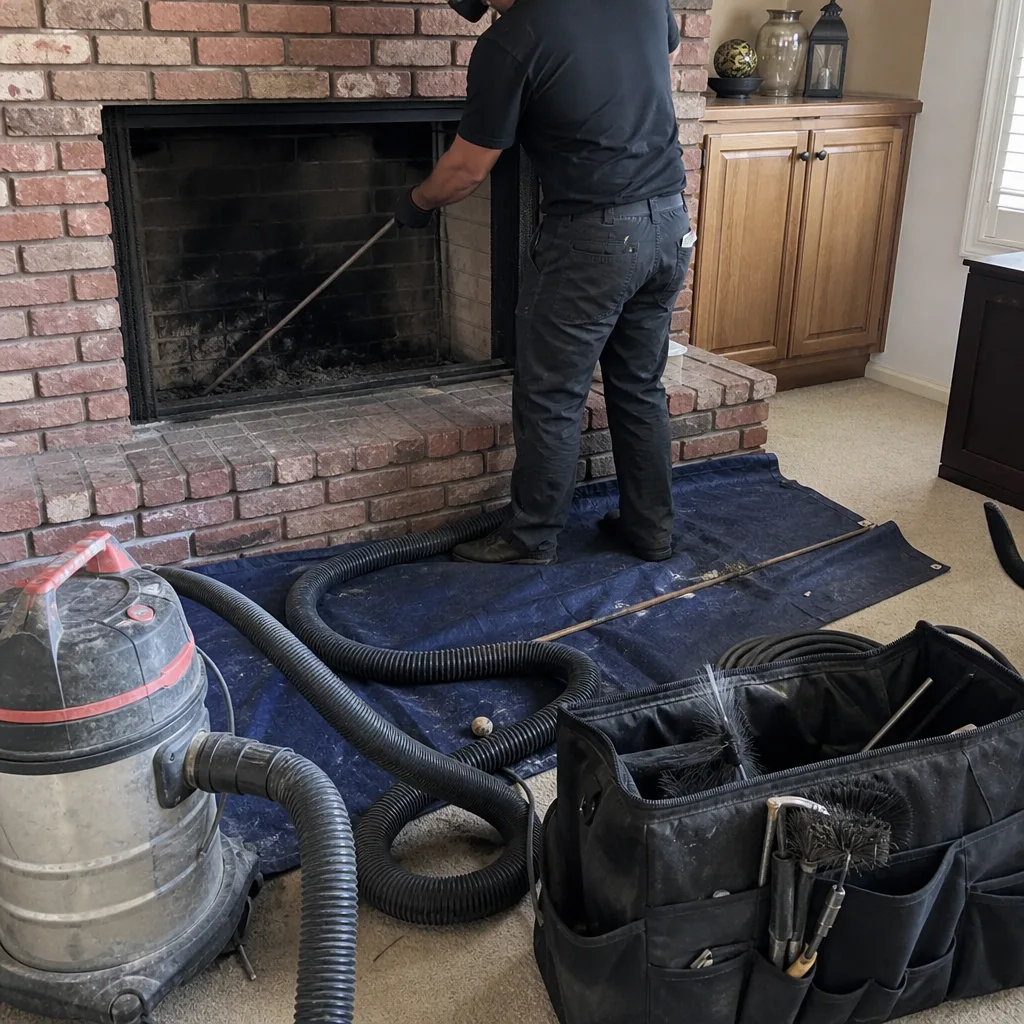
A homeowner chimney cleaning kit typically costs $50 to $120. It includes a few fiberglass or poly rods, a brush sized to a standard flue, and sometimes a small tarp. That kit is a legitimate tool for a specific job: pushing loose first-degree soot out of a straight flue from the top down or the bottom up. What it cannot do is contain the mess, capture the fine particulate, or remove anything past first-degree buildup. Here’s the honest equipment comparison.
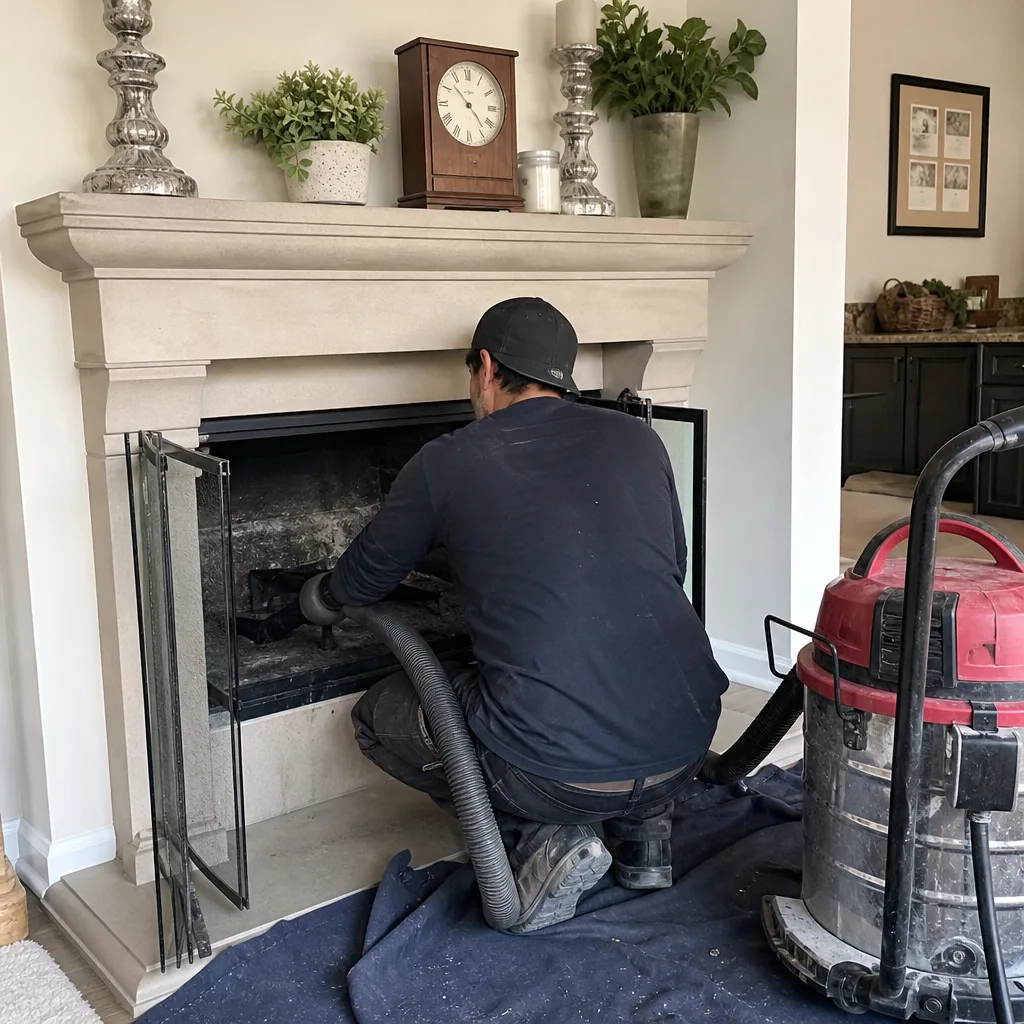
Containment. A professional chimney sweep in Temecula runs a high-powered HEPA vacuum during the entire cleaning. The vacuum is not an afterthought; it’s the primary containment system. Every pass of the brush kicks suspended soot into the air, and without a vacuum running at the firebox opening, that soot settles on the hearth, the floor, the upholstery, and inside the ductwork of the house. Homeowners use tarps and drop cloths, which catch some of it. They don’t catch fine soot, and they don’t create negative pressure in the flue. A professional HEPA setup moves enough air that most of the dust never exits the firebox. That’s the difference between a slightly dirty Saturday and a whole-house cleanup.
Removal capability. Hardware-store brushes are nylon or light poly. That’s appropriate for first-degree soot, and nothing else. Professional sweeps use rotary cleaning systems, which are heavy steel or hybrid brushes powered by a drill, capable of abrading second-degree creosote and, with the right attachment, mechanically breaking third-degree glaze. The rotary system also cleans the full circumference of the flue. A hand brush on rods tends to prefer the path of least resistance, meaning it does a good job on the straight sections and a mediocre job on the edges, corners, and just above the smoke shelf. If your flue has round clay tile liners with slightly misaligned joints, every joint edge is a creosote collection point. Hand brushing misses those. Rotary cleaning gets them.
What you can buy yourself, honestly. If you’re committed to DIY, and you’ve confirmed through an honest visual inspection that your flue is straight, accessible, and carrying only first-degree soot, here’s the minimum kit: a poly brush sized to your flue’s exact dimensions, enough fiberglass rods to reach the full flue length plus two extra rods, a dust mask rated for fine particulates (N95 or better), safety glasses, a headlamp, heavy work gloves, a tarp for the hearth, and a wet-dry vac with a fine-dust filter on standby. You’ll spend $150 to $250 for a setup that works. You’ll also need a ladder that safely reaches your roofline, which for many two-story Temecula homes means a 28-foot or taller ladder, costing another $200 to $400 if you don’t already own one. Add that honestly to the DIY cost calculus.
One more equipment note that rarely makes the YouTube videos: brush sizing. Clay flue tiles in Southern California homes typically run 13″ x 13″, 13″ x 17″, or round 8″ to 12″ diameter. Using a brush too small means incomplete contact with the flue walls. Using a brush too large means it jams, and a jammed brush at the bottom of a 20-foot flue is a genuinely unpleasant problem to solve from the roof. You need to measure the flue opening before buying a brush. Most homeowners don’t. The result is either over-brushing with poor contact or a frustrating jam that requires a professional to remove.
The Inspection Gap: Why Cleaning Is Only Half the Job
Here’s the core of the entire DIY versus professional calculation: cleaning removes debris. Inspection identifies whether the system is safe to use. These are two different jobs, and a rod-and-brush kit only does the first one. When a certified chimney technician cleans a flue in Temecula, the cleaning is the vehicle for the inspection, not the endpoint. The brush removes soot so the technician’s eyes and camera can see what’s underneath. Homeowners who clean their own chimneys usually stop at the soot removal. The inspection gap is where problems hide.
Liner cracks. Clay tile liners crack for predictable reasons: thermal expansion over decades, minor settling of the house, moisture penetration, or the rapid temperature swings that Temecula gets between cold desert nights and warm valley afternoons. A cracked liner is a fire risk because it exposes combustible chase materials to flue gases. It’s also a carbon monoxide risk because flue gases can leak into wall cavities and living spaces. Cracks are visible to a trained eye during a cleaning, especially with a camera inspection. They are not visible to a homeowner pushing a brush down the flue, because the brush head blocks the view and the homeowner is working from the top with no sightline to the flue interior.
Smoke chamber deterioration. The smoke chamber is the area above the firebox and below the flue. In older masonry chimneys, it’s often constructed with corbeled brick steps, and over time the mortar between those steps degrades. This is a genuine failure point: a deteriorated smoke chamber can allow heat and gases to reach the surrounding structure. Inspecting it properly requires a mirror or a camera angled up from the firebox. Most DIY homeowners don’t know the smoke chamber exists, never mind what deterioration looks like.
Failed mortar joints between flue tiles. Clay flue tiles are stacked and mortared. When the mortar between tiles fails, you get gaps. Gaps mean flue gas leakage. Gaps also collect creosote, and they’re nearly impossible to clean effectively with a hand brush. A camera inspection during professional cleaning identifies these gaps clearly. Homeowners with a brush will never know they’re there.
There’s a reason the CSIA and NFPA both recommend an annual inspection regardless of how often the fireplace is used. In Temecula, where many homeowners use their fireplaces for only a few evenings in December and January, the instinct is to skip maintenance because the system “barely gets used.” The problem is that intermittent use doesn’t protect the system. Aging mortar, seismic settling (this is Southern California earthquake country), and moisture intrusion happen whether you burn or not. A fireplace used three times a year still needs an inspection if it hasn’t had one in a decade.
When DIY Chimney Cleaning Genuinely Works in Temecula
Let’s be direct: we’re a chimney service company, and we’re telling you there are circumstances where cleaning your own chimney is reasonable. Here’s the honest list. If every item on this list is true for your Temecula home, and you’re comfortable on a roof, DIY is a legitimate option.
- Single-story home with a shallow roof pitch. Many older Temecula neighborhoods, particularly the original developments from the 1980s and 1990s, have single-story ranch-style homes with modest roof slopes. Access is straightforward from a standard 20-foot or 24-foot ladder. If you’re on a two-story home or a steep tile roof, see the next section.
- Straight flue with no offsets. Offsets are bends in the flue path, common when a chimney is built to route around a beam or a second-story floor. A straight flue is a simple vertical path from firebox to chimney cap. You can confirm this with a flashlight from the roof and from the firebox. If there’s any bend, even a slight one, hand brushing becomes unreliable.
- First-degree creosote only, confirmed. Take a flashlight, remove the chimney cap or damper, and look carefully. If you see flat black dust or powdery soot, that’s first-degree. If you see shiny flakes, crusty buildup, or any tar-like texture, that’s second or third degree, and the DIY conversation is over.
- The chimney was professionally inspected within the last two years. You’re not flying blind on the condition of the liner, smoke chamber, and mortar joints. A clean bill of health on a recent inspection means the only thing you’re addressing is routine soot removal.
- You already own or are willing to buy proper access equipment. A safe ladder, a roof anchor if needed, a dust mask, and the right-size brush. Not improvising with a step stool and a borrowed ladder.
If all five conditions hold, a careful homeowner can remove first-degree soot, vacuum up the debris from the firebox, and be done in an afternoon. The cost is the kit and the time. We’ve met plenty of Temecula homeowners who do exactly this every other year, and then bring us in for the professional cleaning and full inspection in the alternating years. That’s a reasonable rhythm for a lightly used, well-maintained, single-story chimney.
When Self-Cleaning Becomes a Liability
Now the other side. Here are the specific configurations and conditions where DIY chimney cleaning moves from reasonable to genuinely unwise, regardless of the homeowner’s confidence level.
Multi-story homes with steep roofs. Temecula has grown substantially since the 2000s, and a large share of the housing stock now includes two-story homes in developments like Redhawk, Paloma del Sol, and Summerfield. These homes often have steep concrete tile roofs, which are slippery, fragile, and dangerous to walk on without proper equipment. Contractors in Southern California who work on these roofs use fall protection, specialized ladder setups, and careful foot placement to avoid cracking tiles. A homeowner with a ladder from Home Depot and no roof experience is taking a genuinely serious fall risk. An emergency room visit costs more than any chimney sweep.
Offsets in the flue. Any bend in the flue path makes hand brushing largely ineffective. The rods will follow the bend, but the brush won’t maintain proper contact through the offset, and the creosote concentrated at the bend stays in place. Worse, a homeowner without a camera can’t confirm what’s still built up at the offset. You clean the straight sections, miss the bend entirely, and walk away believing the job is done. That’s worse than not cleaning at all, because now you think the system is safe when it isn’t.
Second or third-degree creosote. We covered this earlier, but it bears repeating: if the buildup is crusty, shiny, flaky in thick layers, or glazed, a hand brush is not the tool. Rotary systems, chemical treatments, or both are required. Attempting to hand-brush hardened creosote can break it into chunks that fall and pack the smoke shelf, creating a dangerous partial blockage. This isn’t a “try it and see” situation.
Any indication of water damage. Stains on the ceiling near the chimney, efflorescence (white mineral deposits) on the brick face, or a persistent musty smell after rain all indicate water intrusion. Water-damaged chimneys have their own set of problems: cracked crowns, damaged flashing, spalled bricks. Cleaning the flue doesn’t address any of it. What’s needed is an honest inspection first, then a repair conversation.
No inspection in more than two years. This is the catch-all. If you don’t know the current condition of the liner, the smoke chamber, and the mortar joints, cleaning the soot is rearranging deck chairs. The cleaning gives you a false sense of security without telling you anything about the actual structural safety of the system. Get an inspection first, learn what you’re working with, then decide about DIY for future cleanings.
The honest liability point is this: chimney fires in the United States account for roughly 20,000 residential fires per year according to NFPA data, and the majority of them involve chimneys that either weren’t cleaned or weren’t inspected. Temecula’s fire season awareness is high in the summer months, but chimney fires happen in December and January, when the first cold snap hits and homeowners light fires in chimneys that have been neglected for years. The risk is seasonal, predictable, and largely preventable.
The Honest Math: DIY Clean Plus Inspection vs. Professional Service
Let’s put real numbers on this. The purpose isn’t to make professional service look artificially cheap. It’s to show what you’re actually paying for in each scenario, including the things homeowners usually forget to include in the DIY calculation.
The DIY Clean Scenario
- Chimney cleaning kit (rods, brush, tarp): $50 to $120
- Ladder, if you don’t own one adequate for your roofline: $200 to $400
- Personal protective equipment (dust mask, gloves, goggles, headlamp): $30 to $60
- Time: half a day to a full day, depending on experience and roof access
- All of the above, and you still haven’t had an inspection: $280 to $580 out of pocket, no trained eyes on the system
The DIY Clean Plus Professional Inspection Scenario
- DIY equipment and supplies from above: $280 to $580
- A Level 2 chimney inspection from a certified professional in the Temecula market: typically $150 to $350, depending on camera scope and access
- Total: $430 to $930, plus the DIY time and risk
The Full Professional Service Scenario
- Professional sweeping with HEPA containment and rotary brushing: typically $180 to $340 in the Temecula market for a standard single-flue masonry chimney
- Level 2 inspection with camera: typically $150 to $350, often discounted when bundled with a sweep
- Total: $280 to $550 for cleaning plus inspection, with no ladder climbing, no equipment purchase, and no time on the roof
Here’s the part most comparison guides never admit: when you add the cost of a professional inspection to the DIY cleaning scenario (which is what a responsible homeowner should do), the DIY route is usually more expensive than just hiring the full professional service in the first place. The professional service includes the inspection as part of the visit. The DIY route requires you to buy equipment, do the labor, take the roof risk, and then still pay for an inspection separately. The economics don’t favor DIY unless you’re planning to clean annually for many years and the equipment cost amortizes.
For a Temecula homeowner with a lightly used fireplace who’s diligent about annual maintenance, here’s the honest pattern we’ve seen work well: hire a professional for the first cleaning and inspection. Learn the actual condition of your chimney. If it’s straight, clean, and structurally sound, and the professional confirms first-degree buildup only, then consider DIY for the following year’s cleaning, with a professional inspection every other year. That’s a reasonable, evidence-based approach. The key is that the decision to DIY comes after you know what you’re working with, not before.
Liner Reality: What Temecula Homeowners Usually Discover When the Soot Comes Off
After a proper cleaning, when the soot is gone and the flue is actually visible, that’s when the real condition of the chimney shows up. In our experience across Temecula’s housing stock, which ranges from 1970s original construction to 2010s developments, the discoveries fall into a few predictable categories. Some are manageable. Some require repair. A few are genuinely urgent.
The “looks fine from the top” category. The chimney cap is intact, the crown is holding, and the flue tiles at the top look serviceable. But the camera inspection reveals mid-flue mortar joint gaps, hairline cracking in the clay tiles, or smoke chamber deterioration that was invisible from the rooftop. These are the findings that justify the inspection. A homeowner cleaning from the top would have seen only the top three feet of flue and called it good. The actual condition half-way down tells a different story.
The “liner needs to be addressed” category. Clay tile liners eventually crack, and in Southern California’s seismic and thermal environment, they crack on a predictable timeline. When a liner has significant cracking, the standard repair is no longer patchwork. It’s a liner replacement, and the options are either a stainless steel rigid liner (when the flue is straight and properly sized) or a flexible liner system such as the repairs we perform with trade-brand materials. For older, offset, or irregular flues where rigid liners won’t fit, a flexible system from Oakridge Chimney Sweep home supply partners like DuraFlex is the correct solution. This is where the specialist-versus-generalist difference matters. A sweep-only company can clean the flue but can’t repair it. A contractor who handles repair and installation with professional-grade lining systems solves the whole problem.
The “smoke chamber needs attention” category. Older masonry chimneys in Temecula frequently show deteriorated parging in the smoke chamber. The parge coat degrades, the corbeled brick steps loosen, and the chamber becomes a rough, creosote-collecting, heat-transferring liability. Some professionals resurface smoke chambers with a castable ceramic material. A proper chimney sweep will identify this during the cleaning visit and document it with camera images so you can see the problem directly, not just take a verbal summary.
The broader point is that cleaning is diagnostic, not just maintenance. When the soot comes off, the structure tells you what it needs. A homeowner cleaning alone never hears that conversation. That’s the strongest argument for at least an initial professional cleaning and camera inspection before making any long-term decisions about your Temecula chimney. For more guides & resources on chimney maintenance, explore our blog.
What Actually Happens If You Skip It: Chimney Fires, Carbon Monoxide, and Temecula’s Climate
Let’s talk about consequences plainly, without dramatization. The two things that can go wrong with a neglected chimney are chimney fires and carbon monoxide exposure. Both are real. Both are preventable. Neither is rare enough to ignore.
Chimney fires occur when built-up creosote ignites. The fire can be contained to the flue, or it can crack the liner and spread to the structure. A chimney fire sounds like a freight train or a loud rumble in the flue, and it often produces visible flames from the chimney top. But small chimney fires happen quietly, too, without the homeowner ever knowing. They quietly damage the liner. Then the next fire vents through the newly created cracks and starts heating the surrounding framing. This is how chimney fires become house fires. The NFPA’s guidance is unambiguous: annual inspection, cleaning when creosote reaches 1/8-inch thickness. That threshold is lower than most homeowners expect. An eighth of an inch is roughly the thickness of two stacked pennies.
Carbon monoxide is the less visible risk. When a flue is partially blocked, or when a liner is cracked, combustion gases don’t exit efficiently. They back up into the home. Carbon monoxide is odorless, colorless, and the symptoms of low-level exposure (headaches, fatigue, dizziness) are easy to misattribute to something else. The risk is highest in tightly sealed homes, which describes much of the newer Temecula construction from the last two decades. Modern homes are insulated and sealed far more effectively than the 1980s stock, which is good for energy efficiency and bad for natural ventilation. A compromised chimney in a tight house is a more serious carbon monoxide risk than the same chimney in a drafty older home.
Temecula’s specific climate patterns create a predictable maintenance rhythm. The valley’s shoulder seasons (October and November, March and April) are when fireplaces get their heaviest use, and also when the thermal swings are most extreme. Cold desert nights followed by warm valley days subject the chimney masonry to repeated expansion and contraction. Over years, this thermal cycling accelerates mortar deterioration. The practical implication is that Temecula chimneys benefit from inspections timed before the burning season starts in earnest. For a homeowner who uses the fireplace regularly, late summer or early fall is the right time for a professional inspection and cleaning, before the first fires of the season.
Common Mistakes to Avoid
- Starting the job without identifying the creosote degree. If you haven’t looked at the flue interior with a flashlight and honestly assessed whether you’re seeing powder, flakes, or glaze, you don’t have enough information to attempt a cleaning. Starting the brush work blind is how smoke shelves get packed with dislodged chunks.
- Buying a brush before measuring the flue. Clay flue tiles come in standard dimensions, but they vary. A mismatched brush either fails to clean properly or gets stuck. Measure first, buy second.
- Skipping the inspection because the fire “works fine.” A fireplace can draft acceptably and still have a cracked liner or a failing smoke chamber. Function doesn’t equal safety. The inspection is the only way to know what’s happening inside.
- Assuming gas logs don’t need cleaning. Even gas log sets in Temecula homes need periodic inspection and cleaning, though for different reasons than wood burning. Gas fires produce less creosote, but they can deposit soot, and the venting system still needs to be inspected for blockages and condition.
- Working on a roof without proper fall protection. Temecula’s newer developments have steep tile roofs. A fall from even a single-story roofline can be life-altering. If you’re not equipped to work safely at height, the money you save on a sweep doesn’t come close to the risk you’re taking.
- Treating the cleaning as the end of the maintenance conversation. Cleaning removes what’s there. It tells you nothing about the liner, the mortar, the crown, the cap, or the smoke chamber. A clean chimney can still be an unsafe chimney.
- Waiting until the first cold snap to schedule professional service. Temecula chimney professionals are busiest in November and December, right when everyone remembers the fireplace exists. Scheduling in September or October means faster availability and often more scheduling flexibility. If you’re pairing your chimney service with dryer vent cleaning, which addresses the other major household fire-hazard source, one fall visit covers both systems.
See the difference
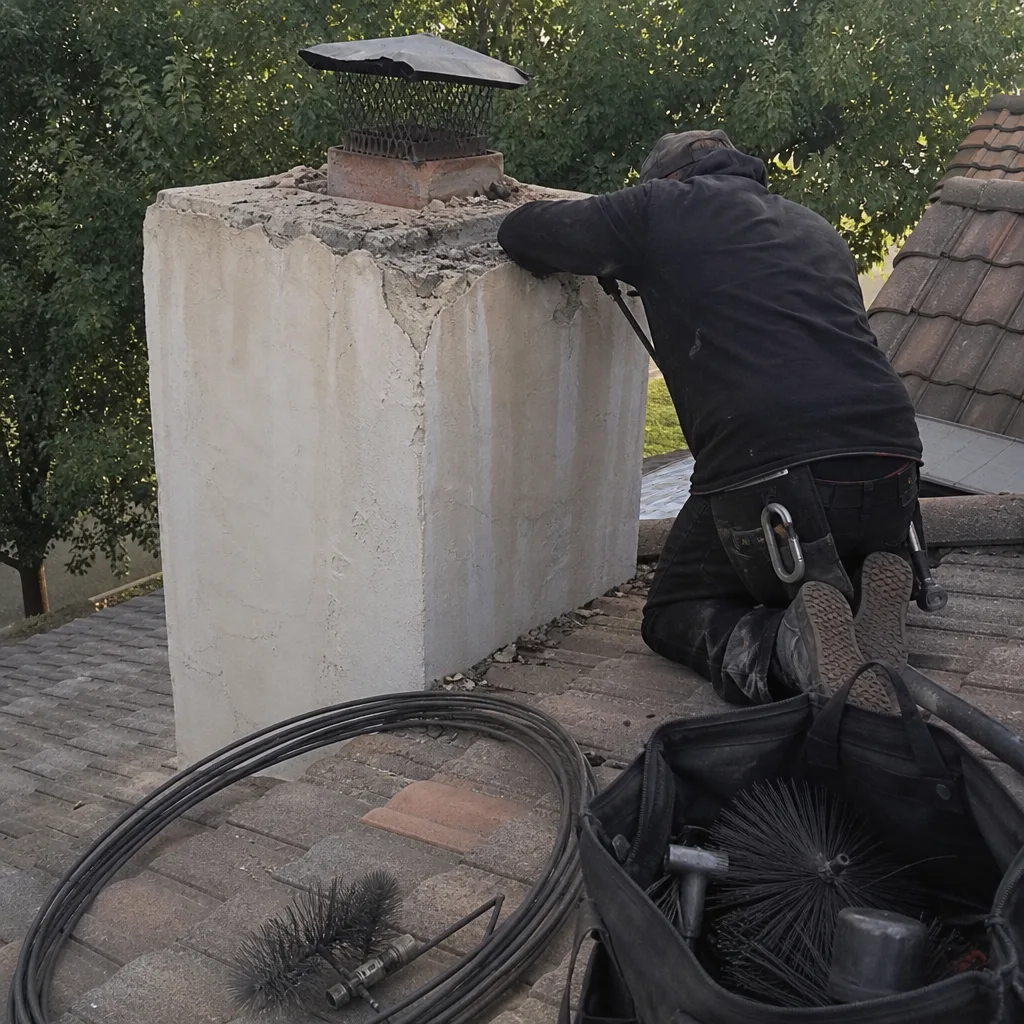 Before
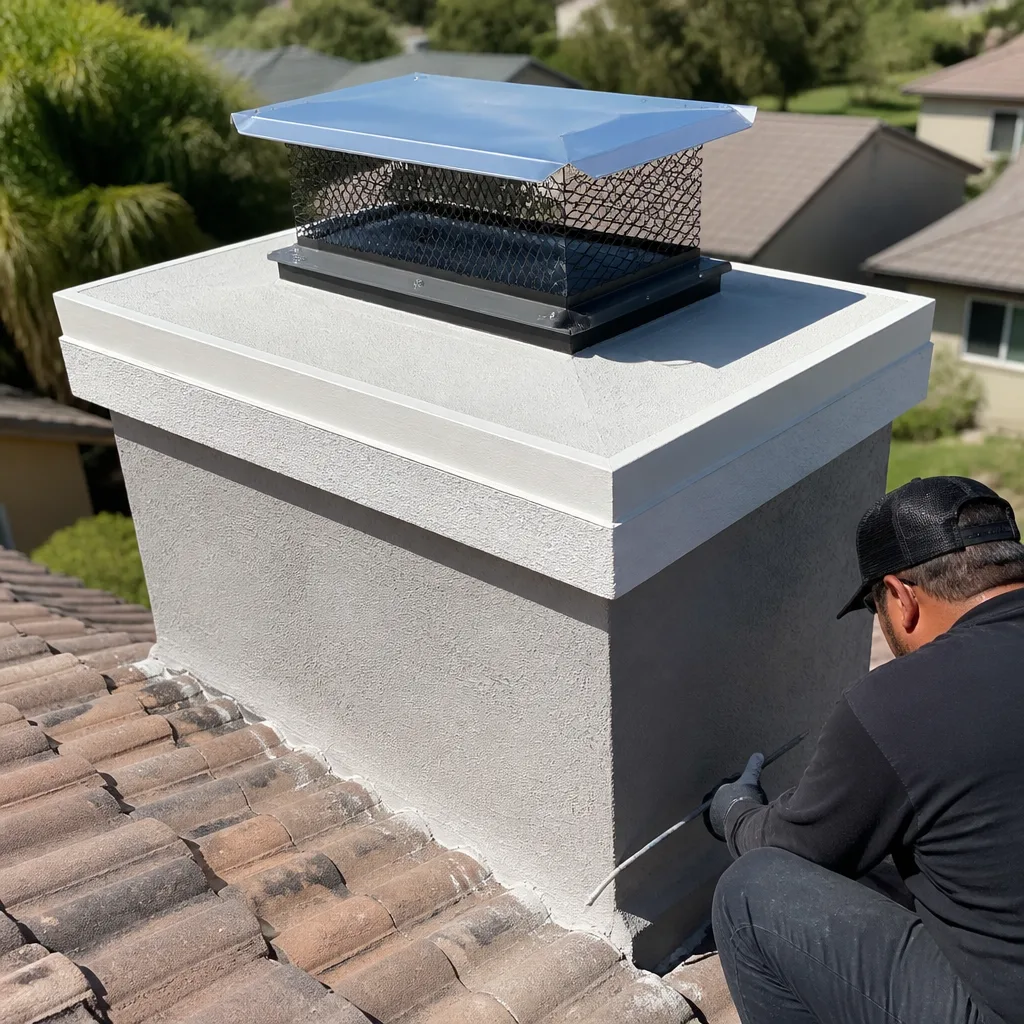 After
 Before
 After
 Before
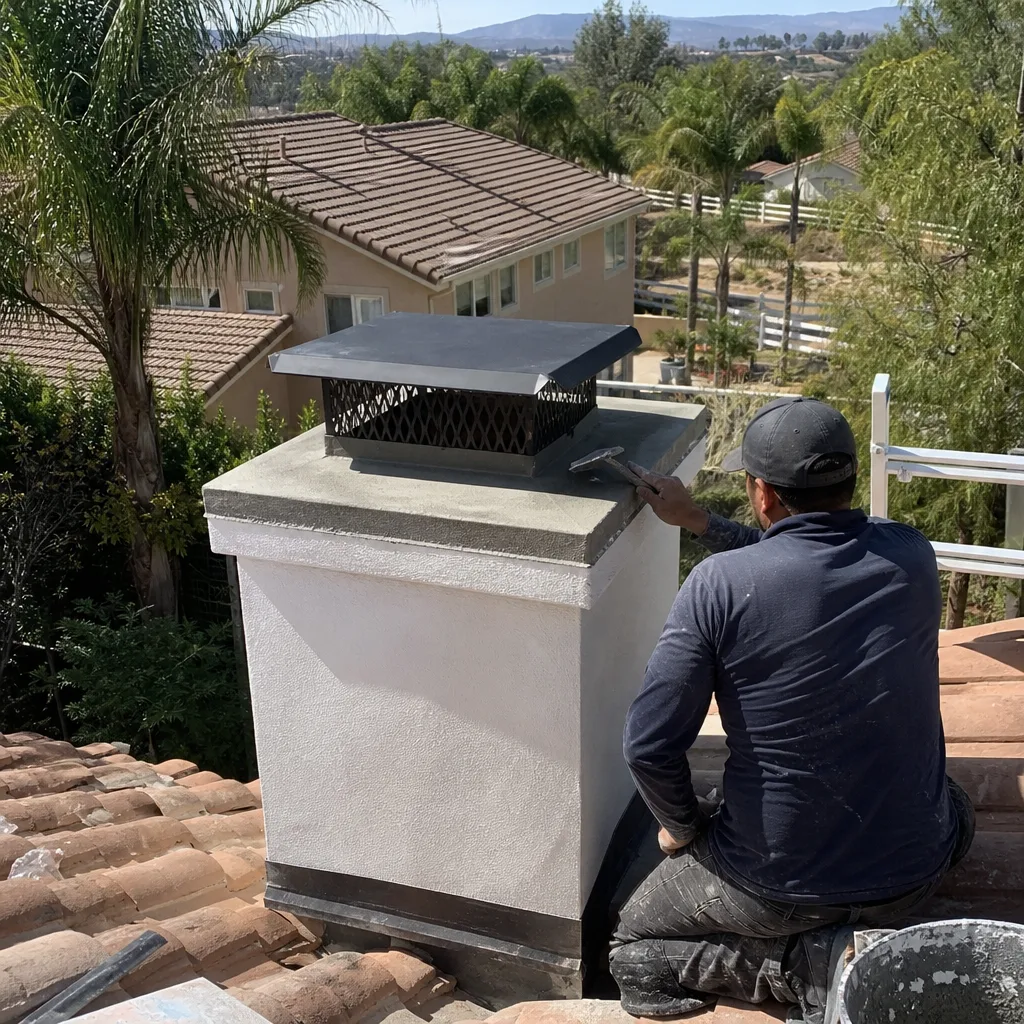 After
When to Call a Professional
Call a professional chimney service rather than attempting DIY when any of these conditions are present: second or third-degree creosote, any flue offset, a multi-story home with roof access you’re not equipped to handle safely, water staining or efflorescence on the chimney, no inspection within the past two years, or any uncertainty about what you’re seeing inside the flue. The common thread is information: if you don’t know what you’re looking at, the responsible move is to get a trained set of eyes on it before you touch anything. Oakridge Chimney Sweep offers free estimates in Temecula, and we document our findings with camera imaging so you can see what we’re seeing before any repair is recommended. Call (866) 563-3051 to schedule an inspection or cleaning, ideally before the burning season is in full swing.
Frequently Asked Questions
Professional chimney sweeping in the Temecula market typically runs $180 to $340 for a standard single-flue masonry chimney, with camera inspections adding $150 to $350 depending on the level of detail required. Most companies, including ours, offer package pricing that bundles the sweep and inspection together, which is the most cost-effective route. Call (866) 563-3051 for a precise quote on your specific chimney, because flue configuration, access difficulty, and creosote degree all affect the final number.
Yes, but only under specific conditions: a single-story home with a straight flue, first-degree creosote only, a recent professional inspection confirming the system is structurally sound, and access equipment you’re comfortable using safely. If any of those conditions isn’t met, the kit creates a false sense of security without actually protecting your home. The right sequence is professional inspection first, then an informed decision about DIY for subsequent cleanings.
The NFPA recommends cleaning whenever creosote reaches 1/8-inch thickness, which for most Temecula homeowners who burn wood translates to once per year if the fireplace is used regularly, or once every one to two years for occasional use. Gas log fireplaces used occasionally can go longer between cleanings, but an annual inspection is still recommended regardless of fuel type and usage frequency.
A sweep removes creosote and debris from the flue so the system can vent safely. An inspection evaluates the structural condition of the liner, smoke chamber, mortar joints, crown, and cap, usually with a camera that shows the homeowner exactly what’s there. A professional service does both in a single visit. A DIY cleaning does only the first part, which is why the inspection gap matters so much in the DIY versus professional conversation.
Gas log sets produce far less creosote than wood fires, but they still require periodic cleaning and inspection. Gas combustion produces acidic condensate that can deteriorate flue liners over time, and vented gas logs can deposit light soot that accumulates. Even vent-free gas logs change indoor air chemistry. The inspection is also important for identifying blockages like bird nests or debris regardless of what fuel you burn.
Creosote builds up in layers, and the lower layers bake into progressively harder degrees that become more difficult and more expensive to remove. Eventually, the buildup creates a chimney fire risk, and any existing liner cracks go unnoticed because no one has looked. The cost of remediation after years of neglect is typically far higher than the cost of routine maintenance. Call (866) 563-3051 for an exact quote, and we’ll give you a straight assessment of where your chimney currently stands. Estimates are free.
The Bottom Line
DIY chimney cleaning has a legitimate place for a specific Temecula homeowner: single-story house, straight flue, first-degree creosote confirmed, recent professional inspection on file, and proper safety equipment. For everyone else, the honest answer is professional service, and the economics support it once you factor in equipment, time, roof risk, and the inspection you should get anyway. The cleaning is the easy part. The inspection is what keeps you safe, and that’s the piece you can’t do yourself. Before burning season arrives, know what’s inside your flue. If you don’t, a camera inspection is the fastest way to find out. Oakridge Chimney Sweep serves Temecula with sweeping, inspection, and full chimney repair, all under one accountable contractor using professional trade-brand materials including DuraFlex, HeatShield, and Copperfield. Call (866) 563-3051 for a free estimate.
Written by the team at Oakridge Chimney Sweep, serving Temecula since 2011.